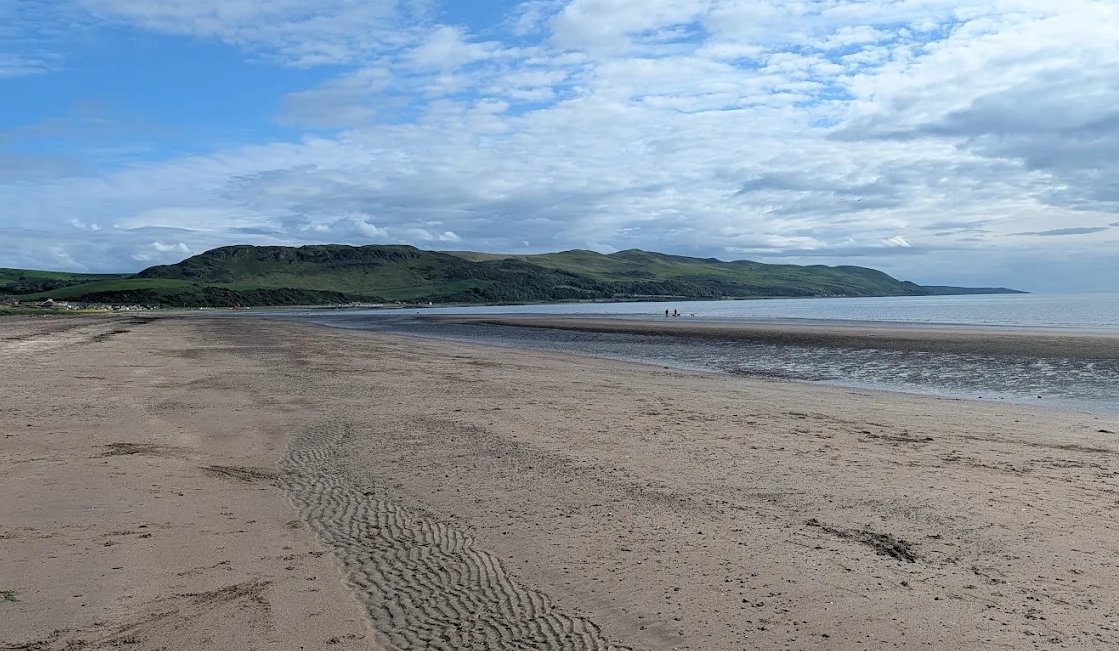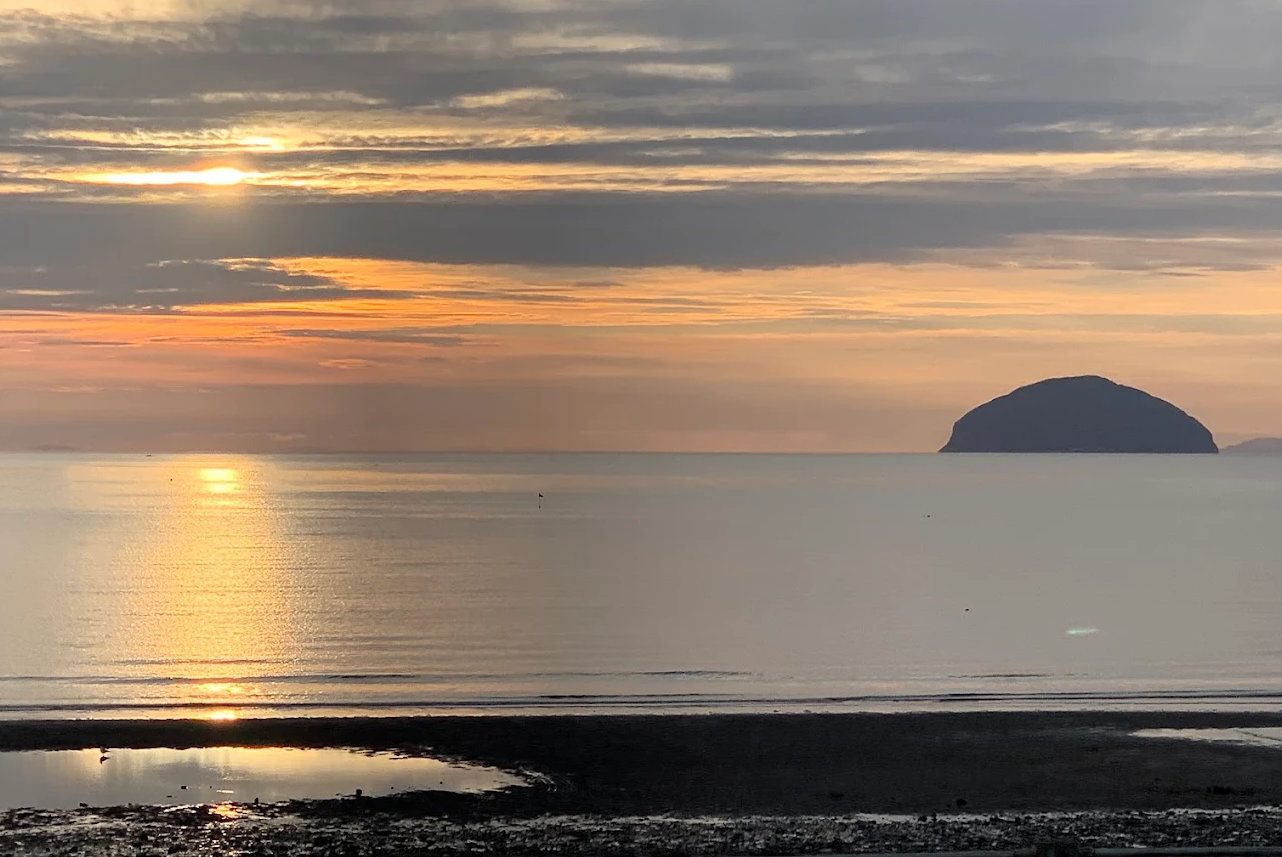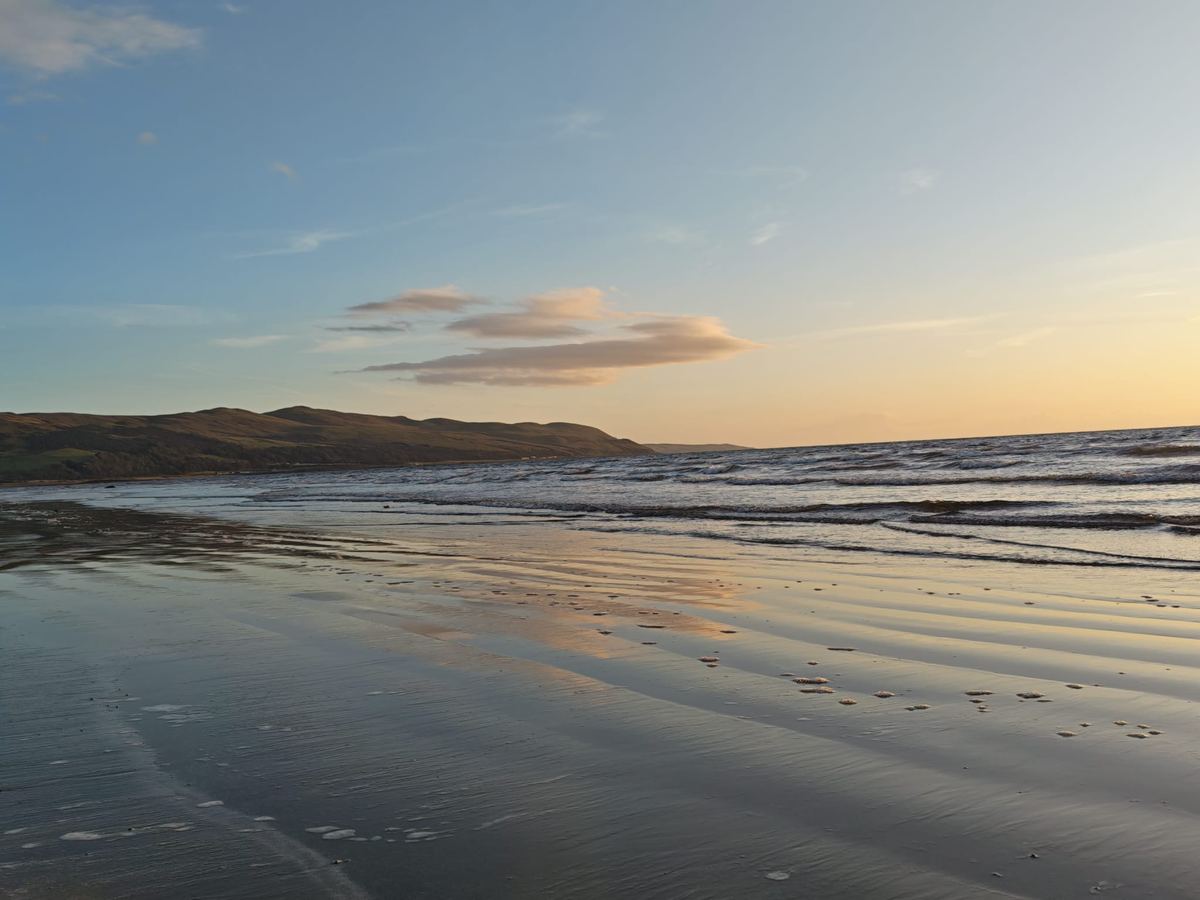
Girvan has two high tides and two low tides a day, as almost everywhere on the British coast. The tide is modest here compared with the Bristol Channel or the Solway, but it still decides a surprising amount of a day out: whether the rock pools are uncovered, whether you can walk round a headland on the coastal path, and how much beach there is to play on.
Where to check the tide times
- Admiralty EasyTide, run by the UK Hydrographic Office, is the official free source. Search for Girvan and it gives the times and heights of high and low water for today and the next six days. It is clearly marked as not for navigation.
- BBC Weather tide tables for Girvan use the same UK Hydrographic Office data, laid out a week at a time.
- Many other tide sites list Girvan too. Most are built from the same official data, but if two sources disagree, trust EasyTide.
Heights are given in metres above chart datum, roughly the lowest level the tide normally falls to, so a low water of 0.4m means very little water indeed and a high water of 3.2m is a big tide for Girvan.
How big the tides are
| High water | Low water | Range | |
|---|---|---|---|
| Spring tides (around new and full moon) | about 3.1m | about 0.4m | about 2.7m |
| Neap tides (around half moon) | about 2.6m | about 0.9m | about 1.7m |
These are the standard average figures for Girvan; any given day can be a little higher or lower, and strong winds and low air pressure push the sea further up the beach than the tables say. High and low water come round about six hours apart, though the tide here does not always take exactly as long to rise as it does to fall, so read the actual times rather than counting forward.
What the tide means for your day
The beach
Girvan beach is sandy at the north end and turns to shingle towards the south. At low water there is a lot more sand to play on and the walk along the waterline is at its best. There are no lifeguards on Girvan beach, so keep a close eye on children in the water whatever the tide is doing.
Rock pooling
Go on a falling tide and be at the rocks around low water. Spring tides uncover the lowest pools, which hold the most life. Two spots near Girvan are only reached across a sandy causeway at low tide, Horse Rock at Girvan and Big Isle at Lendalfoot, so watch the time on the way back. See rock pooling near Girvan.
Fossils on the foreshore
The shale at Shalloch, at the south end of Girvan beach, and the foreshore south towards Kennedy's Pass are classic fossil ground, but they are usually under sand or water. Low tide is essential, and the best exposures come after big tides have scoured the sand away. See sea glass and beachcombing.
Walks around the headlands
This is where the tide matters most. The Ayrshire Coastal Path has short tidal sections on several stages:
- Girvan to Maidens has three short tidal sections, each with an inland alternative.
- Maidens to Dunure has one short section that may be impassable at high tide. Walkers report that Isle Port, at the north end of Croy shore, is usually impassable for about two hours either side of high water.
- Dunure to Ayr has four.
- South of town, on the Lendalfoot to Girvan walk, walkers report the sea reaching the rock armour at Woodland Bay as much as three hours before high water.
The caves below Culzean Castle can be reached from the shore at low tide with a bit of scrambling. Go on a falling tide so the water is going away from you, not coming in.
The harbour
Girvan harbour sits at the mouth of the Water of Girvan, and river silt means the depth in the entrance changes. Pilot guides advise visiting boats to come in or leave within about three hours either side of high water, and warn of rough water in the shallow entrance in onshore winds and a strong outgoing current after heavy rain. If you are bringing a boat, contact the harbour master on 01465 713648 or VHF channel 12 before you arrive.
Ailsa Craig trips
Boat trips to Ailsa Craig run from Girvan harbour, and the deciding factor is usually the weather and sea state rather than the tide alone. Most trips sail round the island rather than land. Book directly and expect the skipper to make the call on the day. See Ailsa Craig boat trips.
Staying safe
The RNLI's advice for not being cut off by the tide is simple:
- Check the tide times before you set out, and again at the start of the day, using a trusted source.
- Keep an eye on the incoming tide while you are out, and leave yourself plenty of time to get back.
- Carry a charged phone.
- If you are cut off, stay where you are, as far from the water as you can, and dial 999 or 112 and ask for the Coastguard. Do not try to swim or wade round.
- If you fall in, float to live: lean back, spread your arms and legs, and float until you can breathe normally.
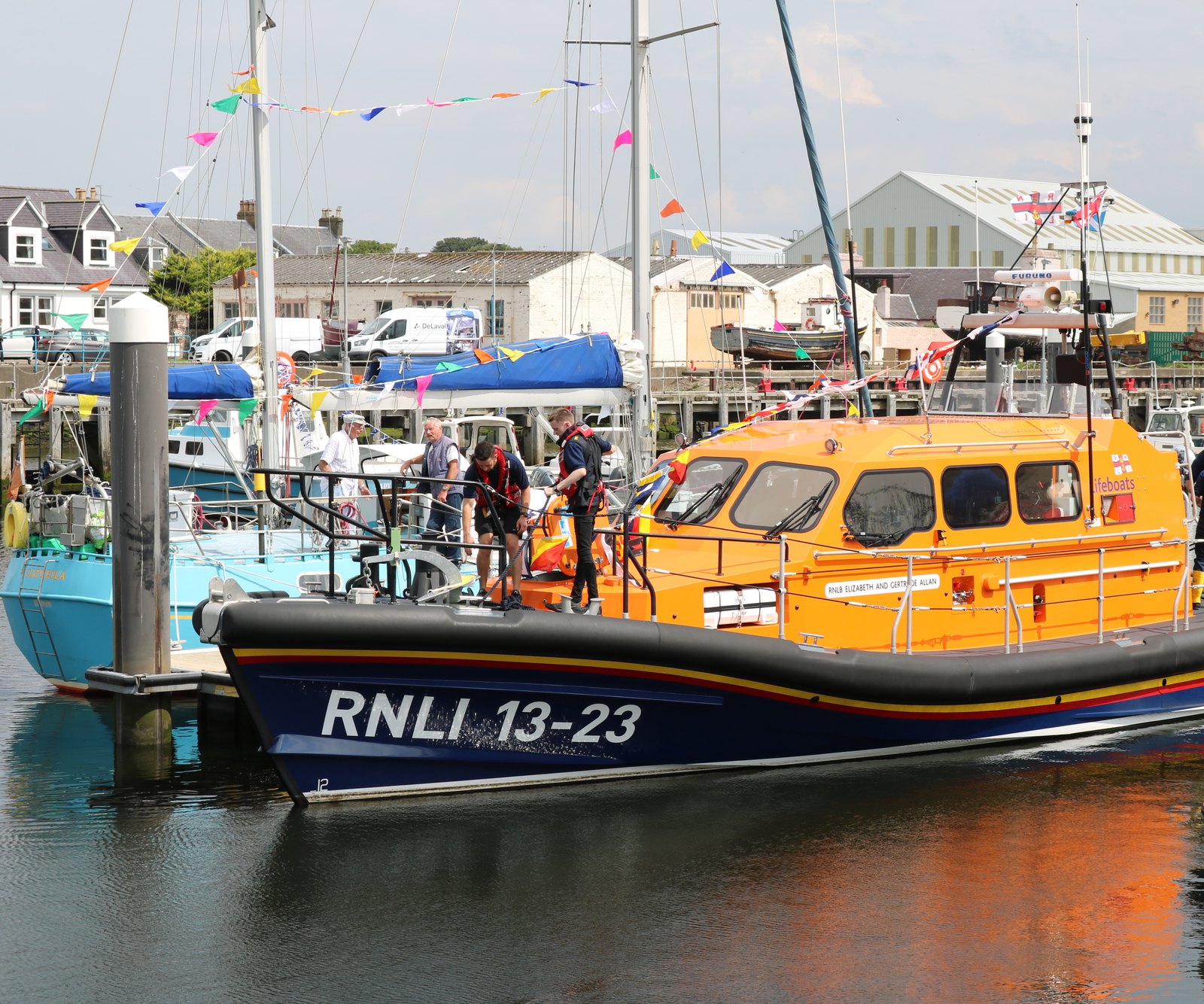
Girvan has its own all-weather lifeboat at the harbour. See Girvan Lifeboat Station.