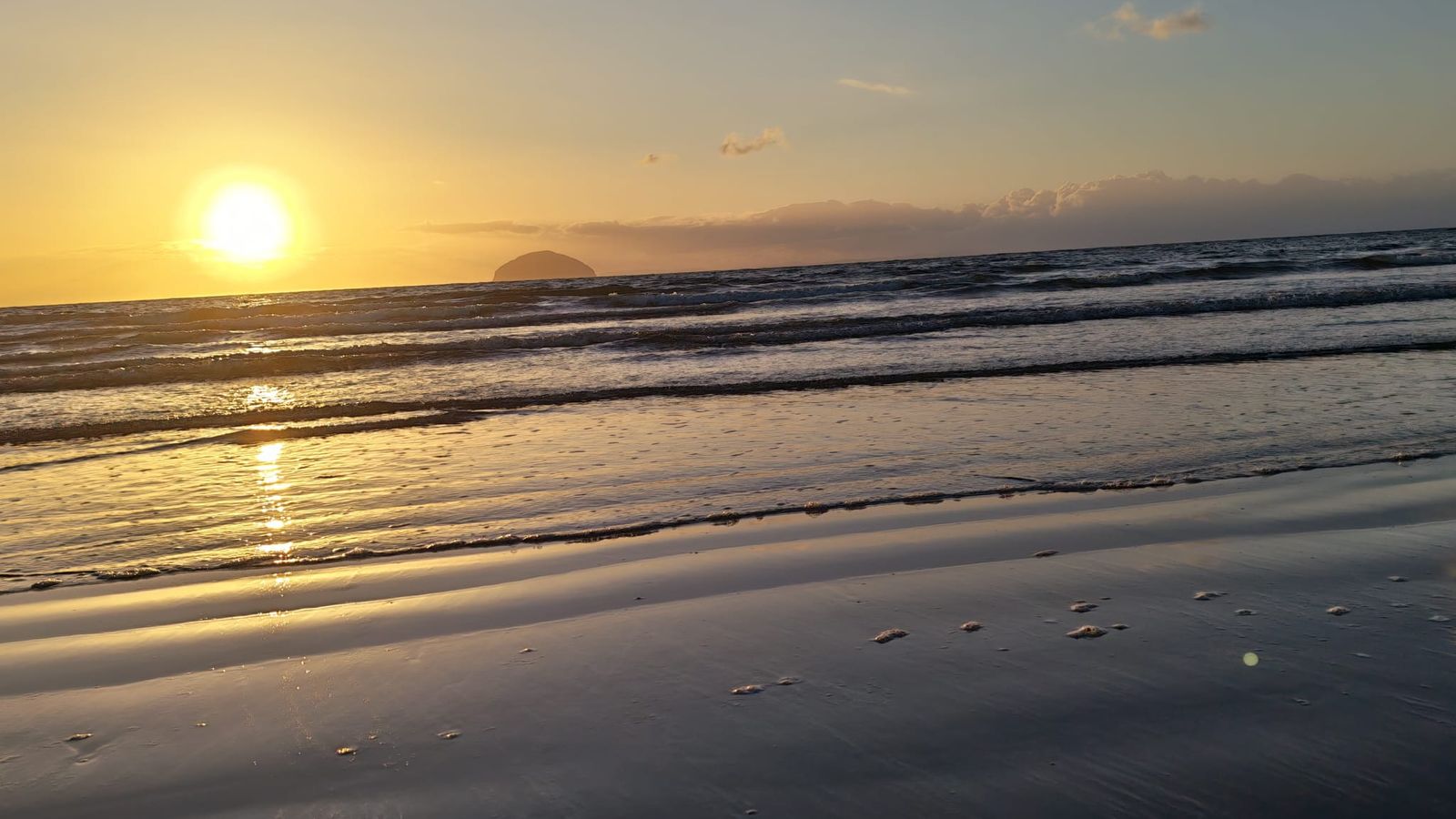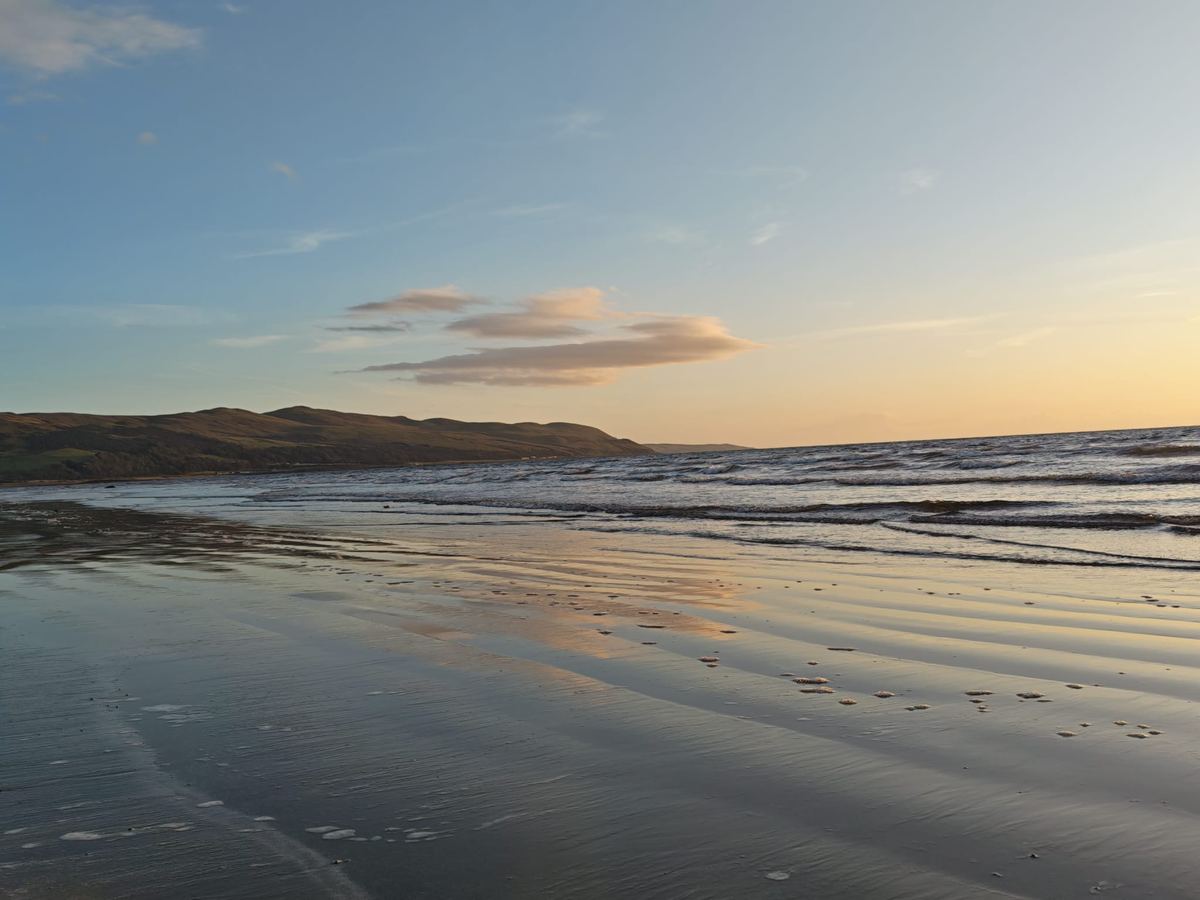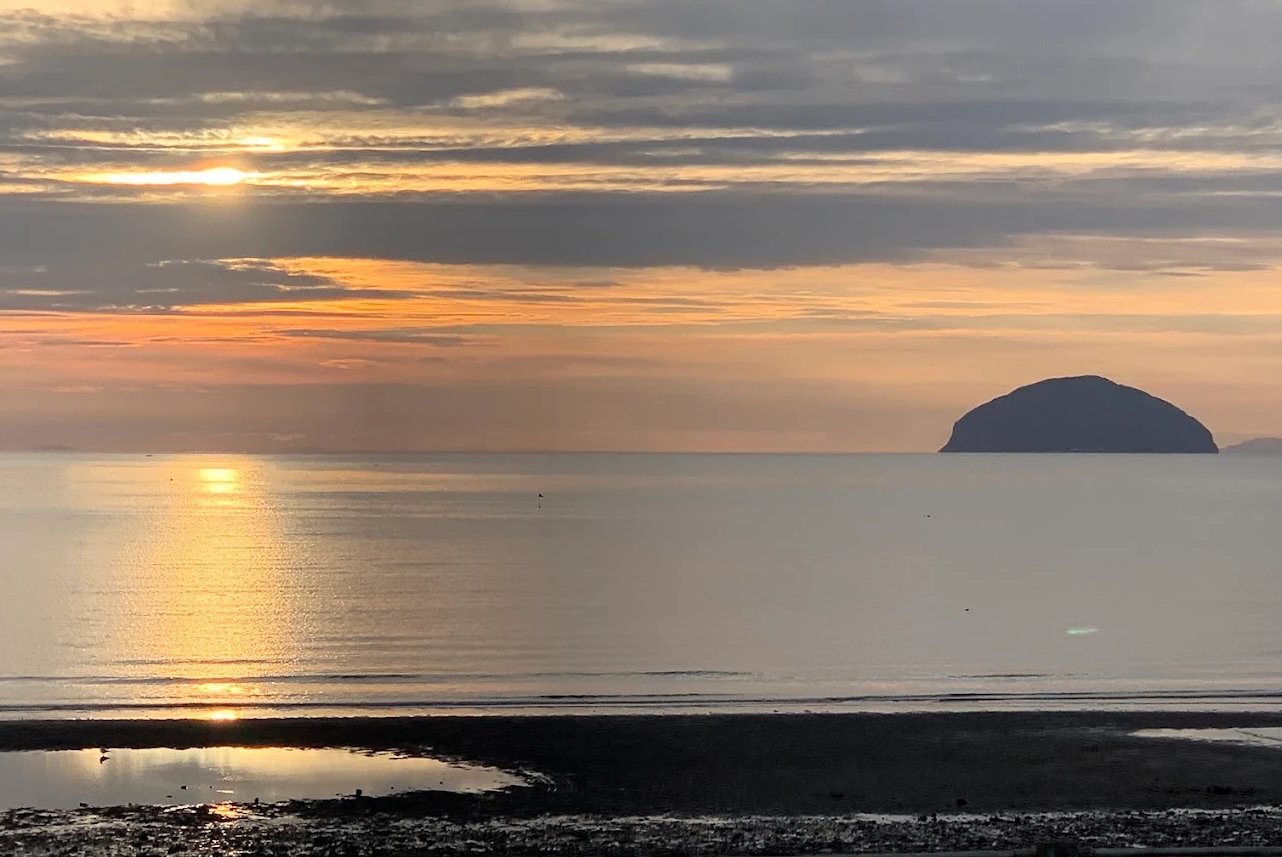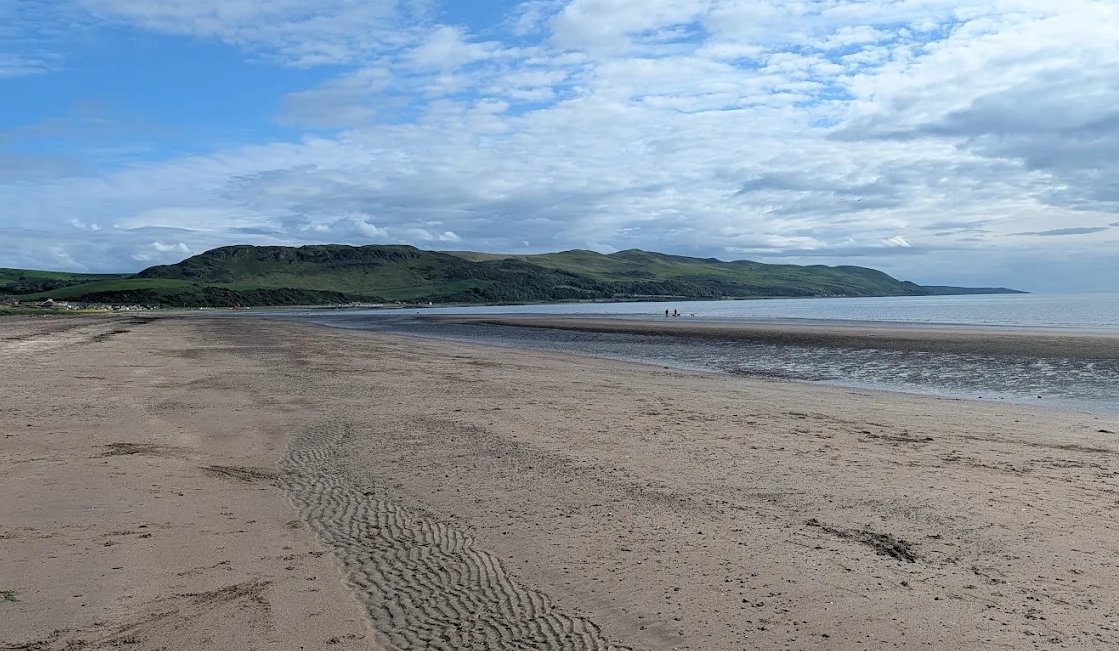
Sea glass is broken glass that the sea has worked on for years, rolling it in sand and shingle until the edges are smooth and the surface turns frosted. Most of it is old bottle glass, white, green and brown, with blue, purple and red the rare finds. In June 2026 The Scotsman put Girvan on its list of the best Scottish beaches for sea glass, saying it can be productive, particularly after a storm. It listed Dunure, below the castle ruins, as the other Ayrshire spot.
Be realistic: the same article says the west coast is generally less productive than the east, so this is a pleasant hunt along a long beach rather than a guaranteed haul. That is half the appeal.
Where and when to look
- After a storm. Rough seas bring up new material and move the shingle, which is when the glass appears.
- Around low tide, along the strandline, the line of weed and debris the last high tide left behind, and in the bands of small shingle.
- Towards the south end, where Girvan beach turns from sand to shingle. The shingle is a rare habitat in Scotland and important for breeding birds, so tread lightly in spring and summer.
- At Dunure, in the coves below the castle, half an hour north.
Check the tide times before you go.
Other things to find
Fossils
Girvan's foreshore is famous among geologists. At Shalloch, the rocks at the south end of the beach, Ordovician graptolites, fossils of tiny colonial sea creatures some 450 million years old, occur in greenish shale. The shale is usually covered by sand and only shows after big tides have scoured it, so low tide is essential. The foreshore south towards Kennedy's Pass is a classic British Geological Survey excursion, with trilobites, brachiopods and graptolites in the rocks.
Much of this shore is a Site of Special Scientific Interest. Look all you like, but do not hammer the bedrock, and follow NatureScot's Scottish Fossil Code. The BGS also asks visitors not to remove the igneous pebbles at Myoch.
Mermaid's purses
The leathery egg cases of skates, rays and catsharks wash up on beaches all round Britain, and Scotland's west coast is especially important for records of the flapper skate, one of the world's largest and most endangered skates. If you find one, photograph it and log it with the Shark Trust's Great Eggcase Hunt, which uses the records to track where these fish breed.
Ailsa Craig granite
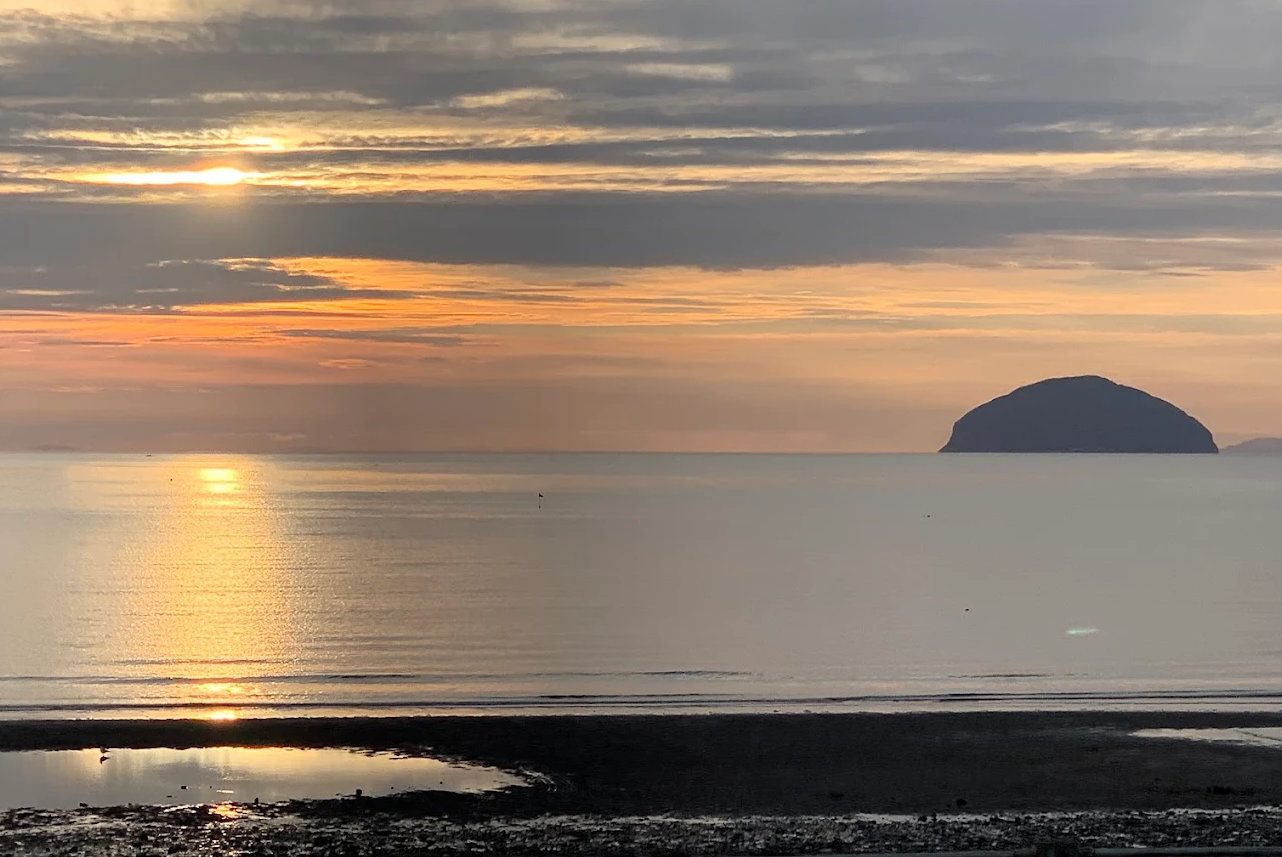
Ailsa Craig, ten miles offshore, is the main source of granite for curling stones, and its distinctive speckled microgranite was carried far and wide by the ice: geologists have recorded Ailsa Craig boulders on the coasts of Ireland, England and as far away as Pembrokeshire. Whether a speckled pebble on Girvan beach is the real thing is a question for a geologist, but it is a good one to ask on a walk. See the story of the curling stones.
What you can take home
Scotland has a long tradition of beachcombing, and picking up a few small pieces of washed-up glass is generally seen as fair game. Pebbles, sand and shingle are different. Councils can ban their removal under the Coast Protection Act 1949, and taking them damages the beach that protects the coast behind it. We know of no specific order covering Girvan, but the simple rule is:
- Take a little sea glass, if you like.
- Leave the pebbles, sand and shingle, and the fossils in the bedrock.
- Take nothing living, and put rocks back as you found them.
- Take any litter you find, which helps everyone.
The beach cleans
Girvan beach holds a Keep Scotland Beautiful Beach Award, renewed in 2026, and a lot of that is down to local people. The local group Get Girvan Gleaming helps organise cleans, and Girvan's north and south beaches take part in the annual Big Beach Clean along the Ayrshire coast, run each spring by the Rotary Club of Ayr and the Ayrshire Coastal Path. In April 2025 more than 150 volunteers filled over 300 bags of rubbish across 19 beaches between Girvan and Irvine. If you are here at the right time, join in.