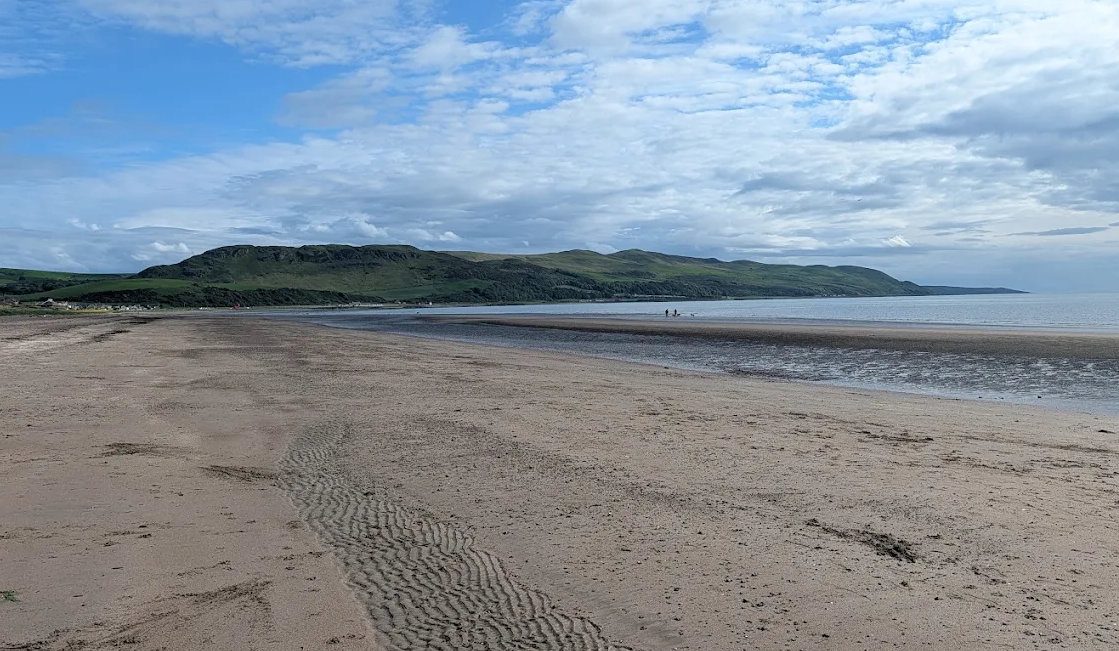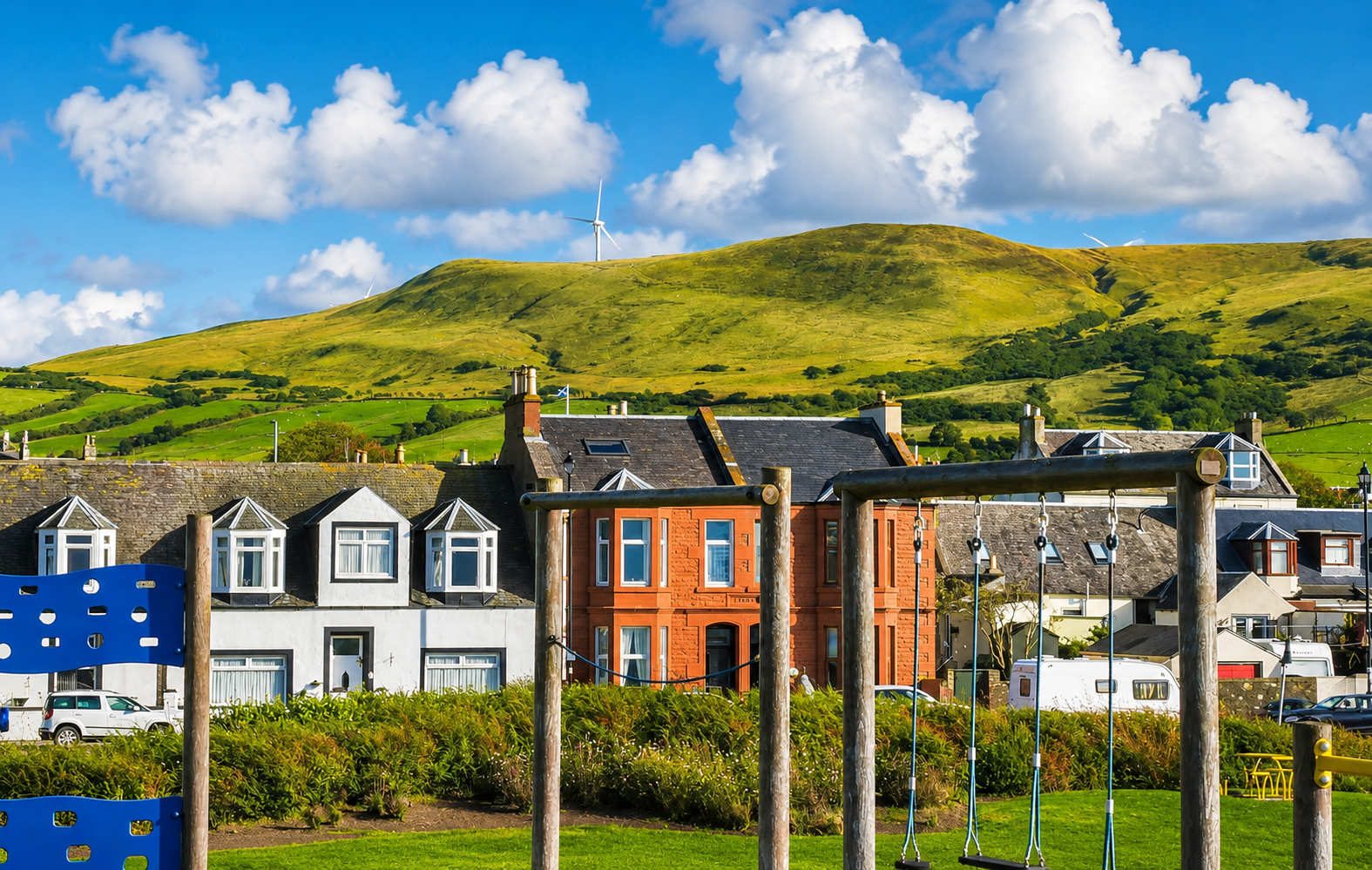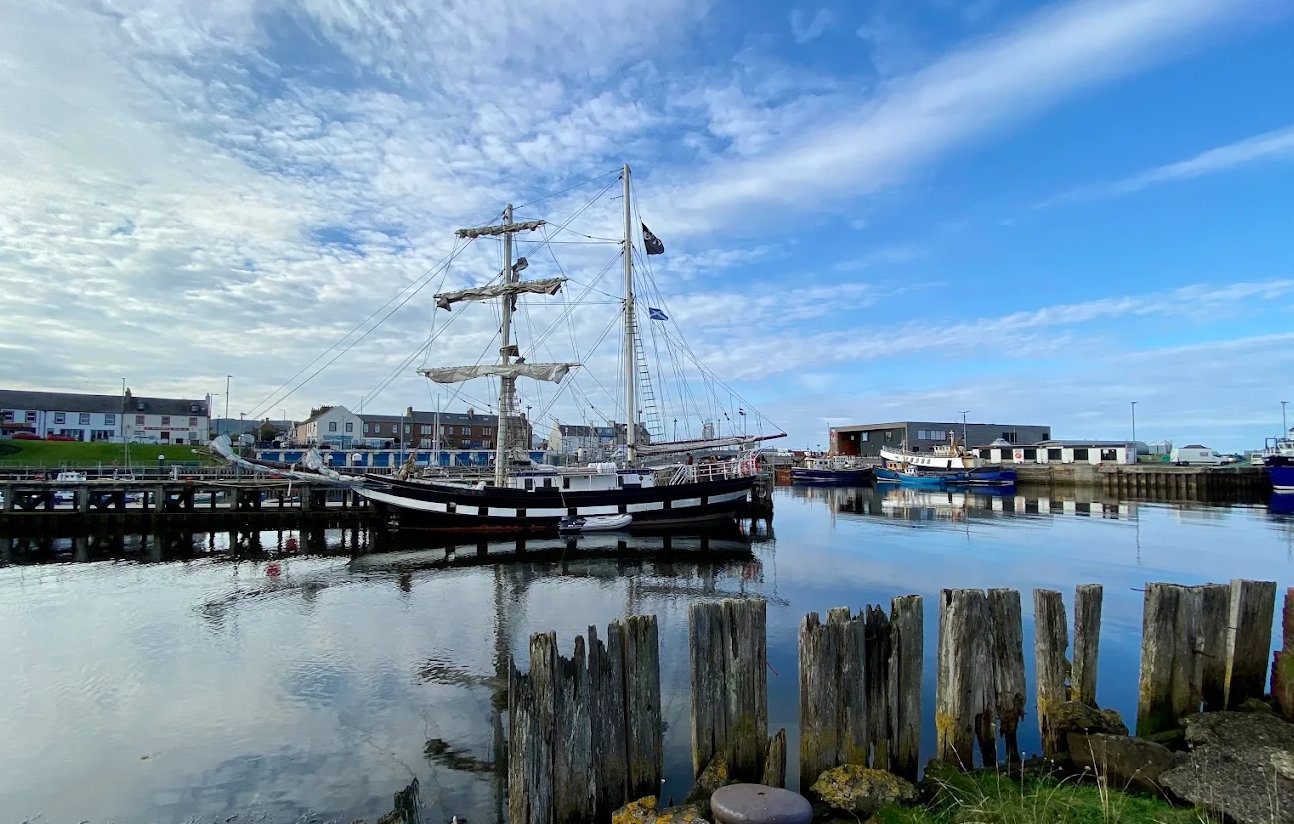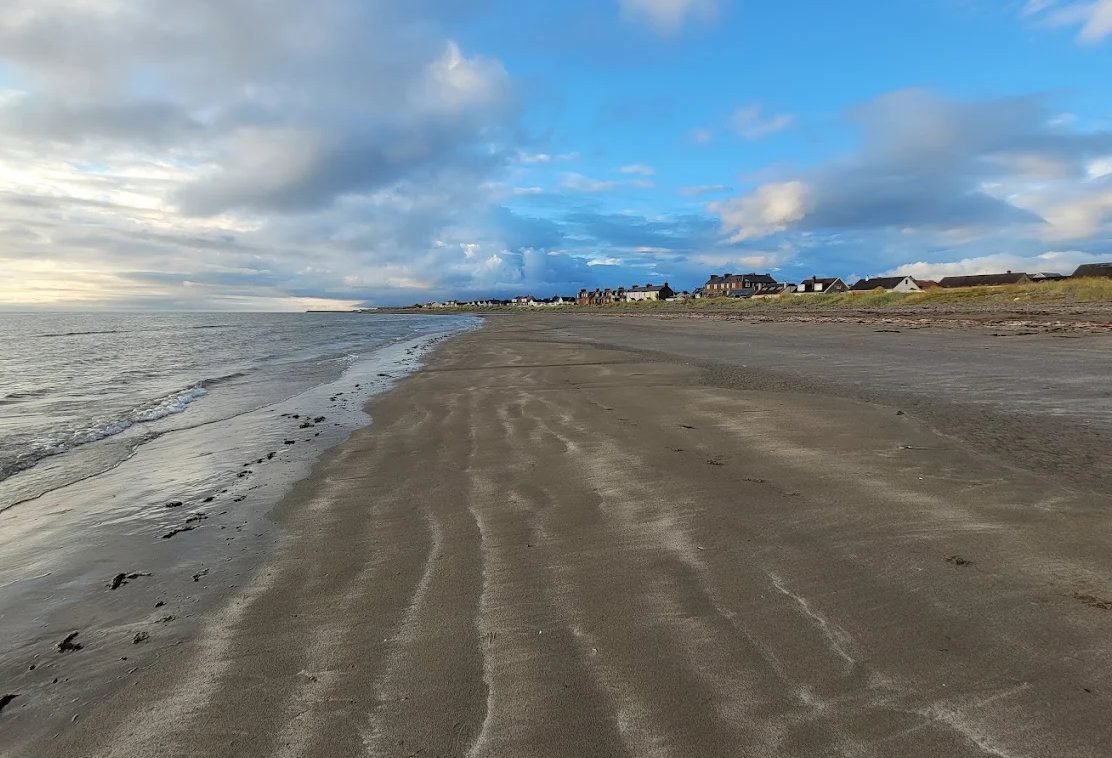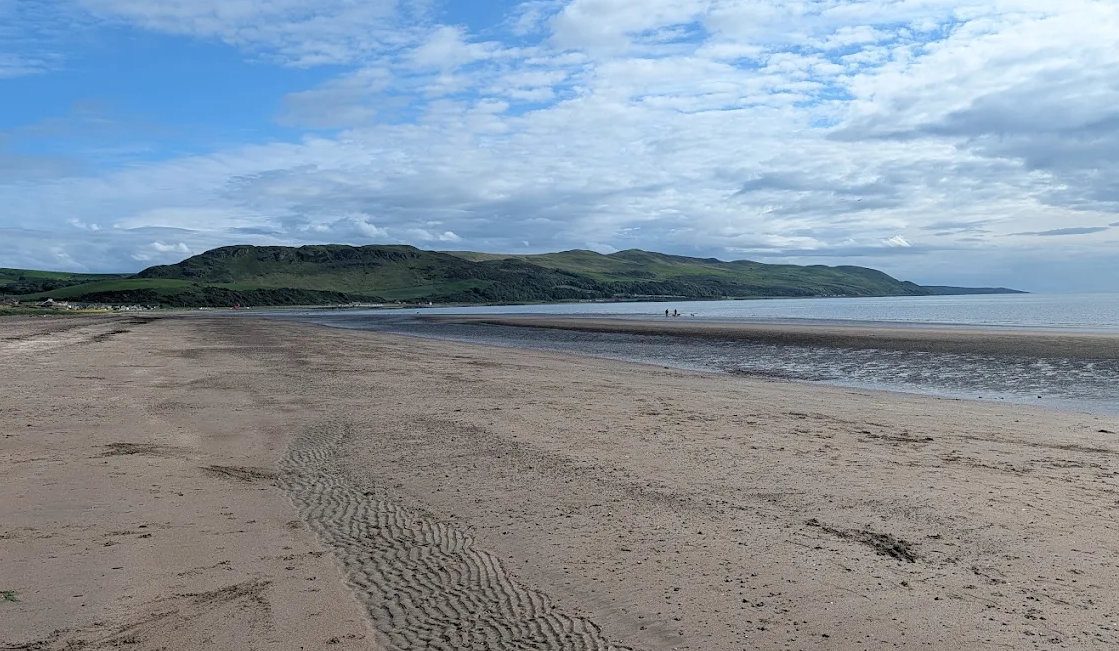
Portpatrick Dunskey sits on the cliffs above the prettiest harbour village in Galloway, about 150 feet above the Irish Sea, and it is one of the most scenic rounds in the south-west. It is not a links and it is not parkland: rolling moorland and seaside heath, playing firm and fast in summer, with the Gulf Stream keeping it open all year.
How it came to be here
The course was one man's plan for a village. Charles L. Orr Ewing MP, who owned the Dunskey Estates, could see what a golf course and a hotel would do for Portpatrick — the Portpatrick Hotel duly opened in 1905.
In the autumn of 1902 he walked the ground with Charles Hunter, the professional at Prestwick Golf Club — the club where the Open Championship began — and the following year the course opened over Kennel Park and much of the Mill Field, more than a hundred acres in all. Hunter's original nine measured 1,445 yards.
In 1913 it was extended to eighteen holes of 5,570 yards, taking in part of Cove Hill, and the nine-hole Dinvin was laid out — described at the time as being for the ladies. The club finally bought the land from the Dunskey Estate in the 1980s. Various changes since have brought the Dunskey to its present 5,913 yards, par 70.
The golf
Under 6,000 yards, and that is the point: this is a course defended by wind, cliff edges and fast greens rather than length. There are only two par fives and four par threes, and of the twelve par fours only one measures over 400 yards.
The signature 13th, 'Sandeel', and the 14th, 'Glenside', are both driveable at under 300 yards — which is exactly the sort of hole that ruins scorecards. From the 13th tee on a clear day you can see the Irish coast some 22 miles off, with the Isle of Man to the south and the Mull of Kintyre to the north. The path beside it is the first stage of the Southern Upland Way.
In a stiff westerly it is as hard as anywhere. In still weather it is a delight and eminently scoreable. The SSS is 69.2 off a slope of 120.
The Dinvin
The nine-hole par-3 Dinvin is maintained to the same standard as the big course and takes about an hour. It is genuinely good — ideal for beginners, children, or an hour on the short game — and at £15 for a day ticket it is one of the best-value things in this guide.
Green fees (2026)
The club publishes its tariff, last updated January 2026:
| Ticket | 2026 price |
|---|---|
| Dunskey, 18 holes | £60 |
| Twilight, from 4.30pm any day | £50 |
| Day ticket | £80 |
| Three-round pass | £120 |
| Weekly ticket | £160 |
| 27 holes (Dunskey and Dinvin) | £65 |
| Dinvin day ticket | £15 |
| Dinvin 10-day pass | £100 |
| Juniors under 18 | Half price, both courses |
The weekly ticket at £160 is the standout: less than three individual rounds, on a course you will want to play repeatedly. Discounted tee times also turn up on the booking platforms, so it is worth a look before paying the rack rate.
Visitors and facilities
Visitors are genuinely welcome — this is a club built on holiday golf, and half its income was coming from visiting green fees as long ago as 2003. A golf magazine called it the number one holiday golf destination back in 1984 and its regulars have been returning ever since. Societies are welcomed year-round.
Book online or ring 01776 810273. There is a dress code, published on the club's website — read it before you travel. The website also carries a live course status panel, which is worth checking in winter.
The clubhouse has a lounge and dining room with panoramic windows over the course, a well-stocked bar, and a pro shop offering lessons, custom fitting, an indoor studio and junior coaching. There is a driving range between the two courses and a putting green by the first tee. Buggies are available.
Getting there
About 55 minutes from Girvan via Stranraer, and the course is a short walk above Portpatrick village — so the harbour, the pubs and the cliff walk to Dunskey Castle are five minutes below when you have finished. It makes an excellent pairing with a Rhins day.