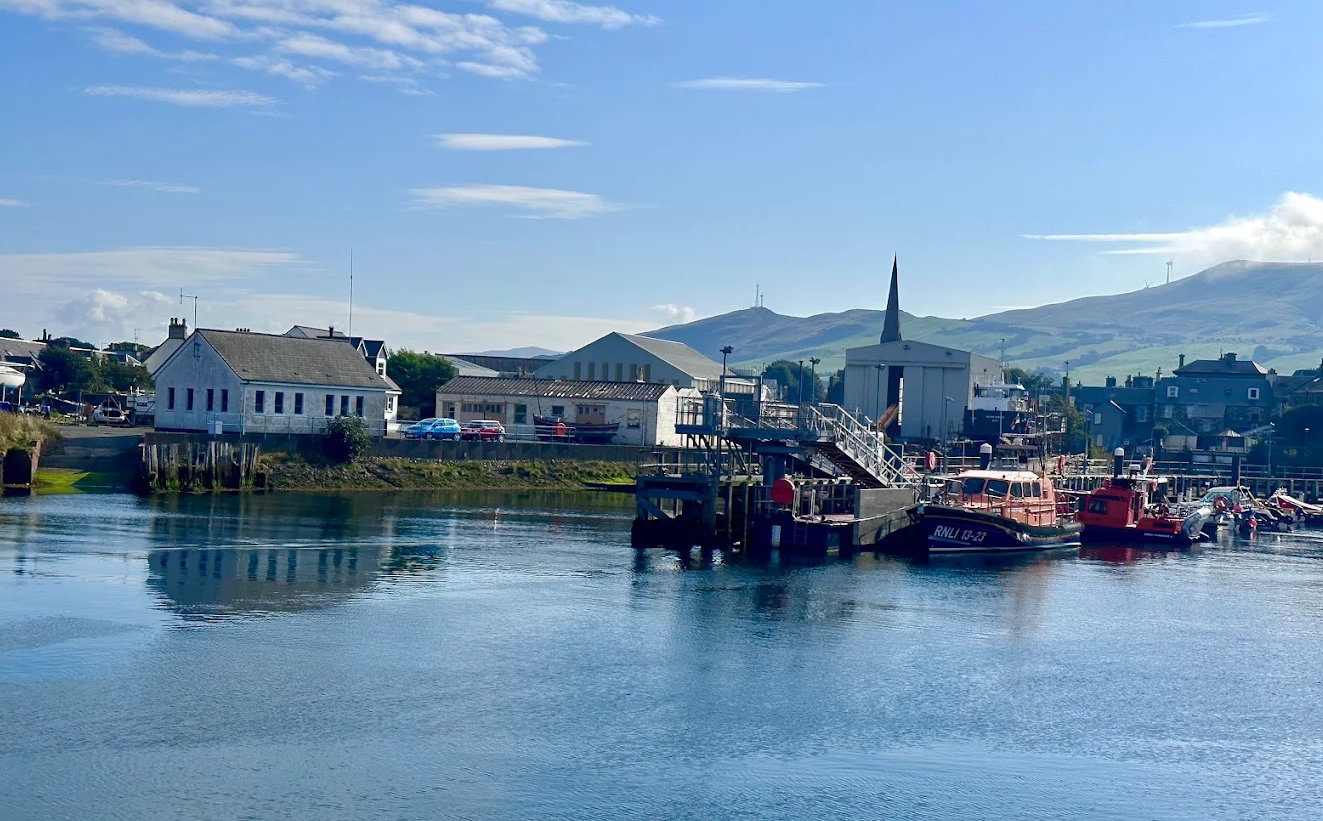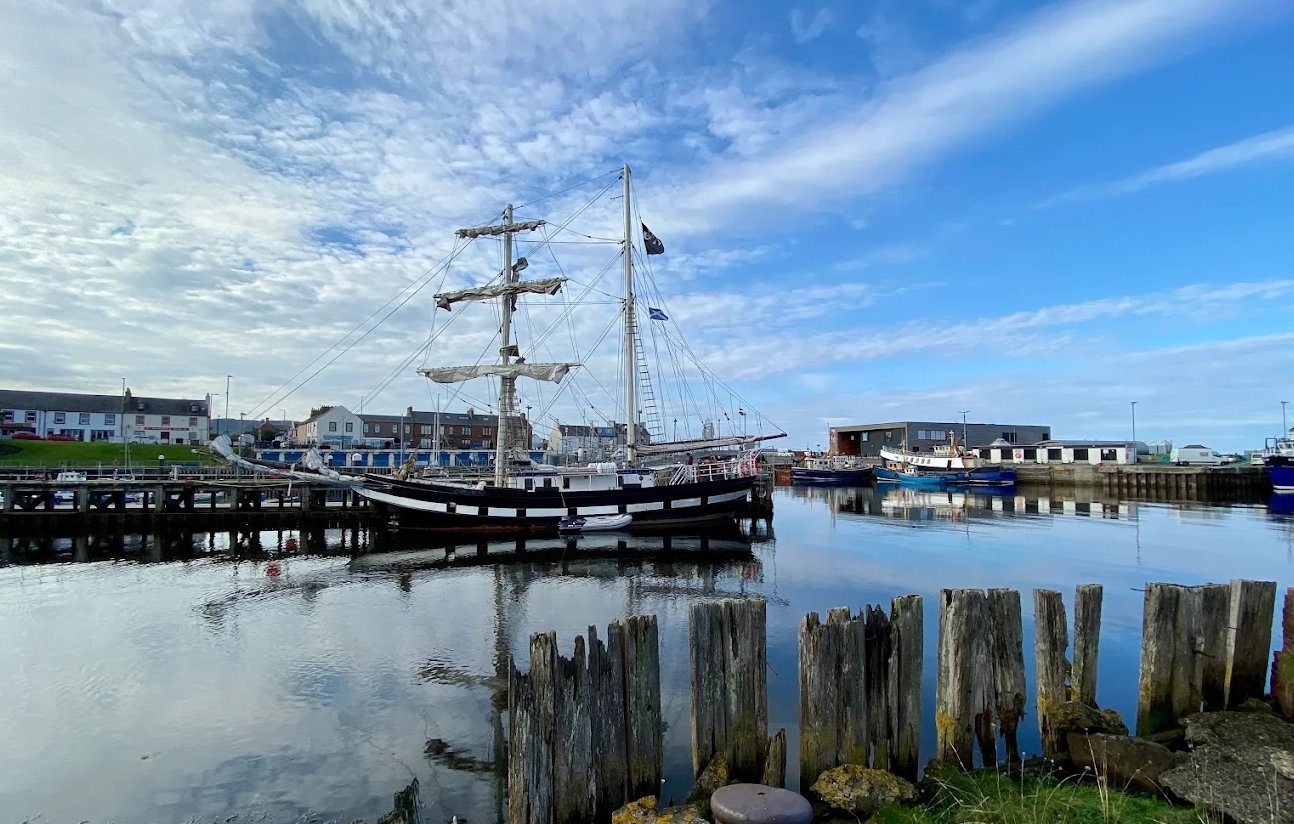
Girvan harbour is built into the mouth of the Water of Girvan, and that river mouth is the whole reason there is a town here. It gives natural shelter that almost nowhere else on the fifty miles of coast between Ayr and Stranraer can match — a boat could get in and out of it on almost any wind.
It is still a working harbour rather than a preserved one, which is what makes it worth an hour of anyone's time.
What goes on here
Fishing boats still land at the quay, though the fleet is a fraction of what it was: this was a herring and white-fish port whose fishing peaked through both world wars and into the mid-1960s.
The RNLI lifeboat sits on Knockcushan Street. There has been a station here since 1865, in the present building since 1993, and it currently operates a Shannon-class all-weather lifeboat, the Elizabeth and Gertrude Allan, on service since 2018.
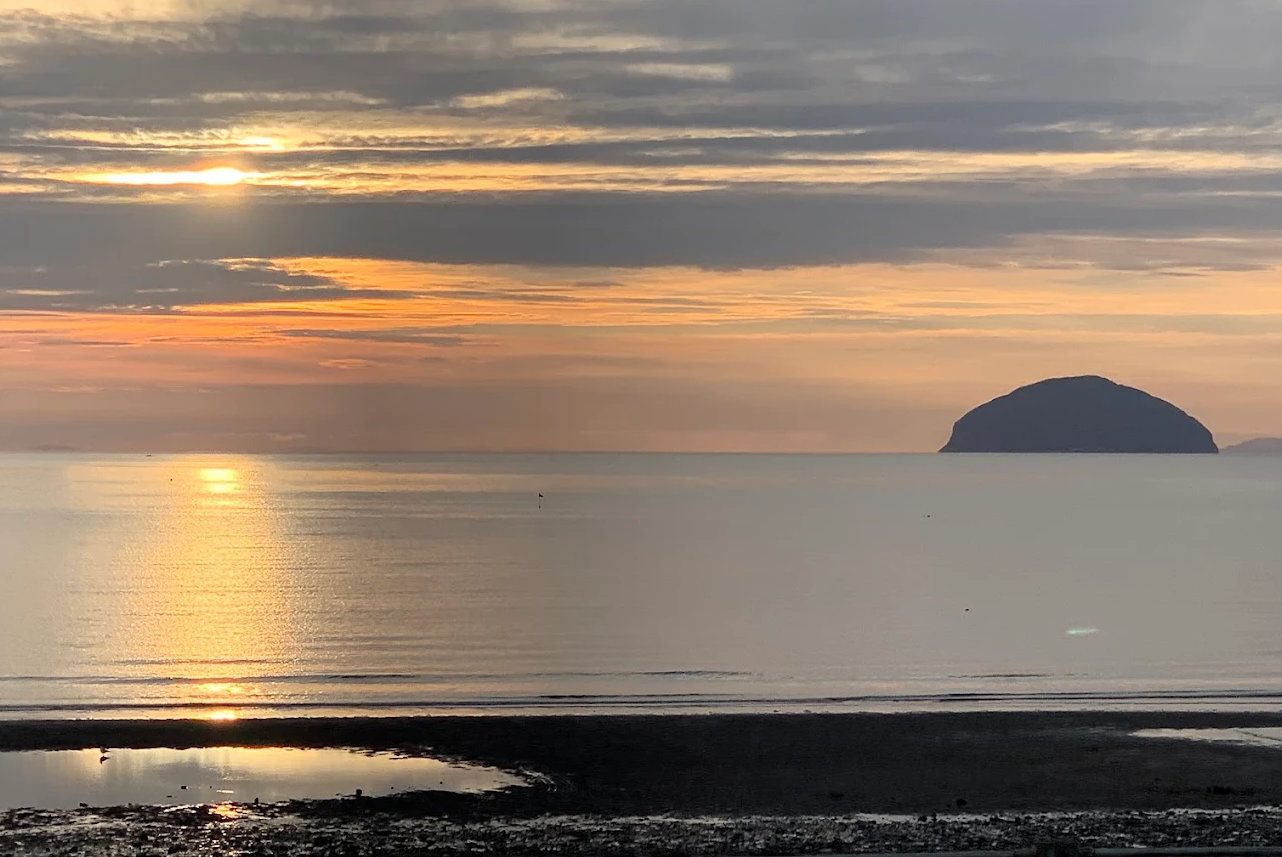
The Ailsa Craig boats and sea-fishing charters run from spring to autumn — see boat operators and sea fishing. It is worth walking down even just to book in person.
Visiting yachts use the pontoons in the inner basin.
The boatyard
On the north bank, Alexander Noble & Sons have been building and repairing boats since 1946, when Alexander Noble started on a greenfield site at Newton Kennedy. There was an opening after the war: boats had been requisitioned, the country needed food, and the government was funding new fishing vessels.
Between 1946 and 1992 the yard built around ninety wooden fishing boats — the phrase 'built by Nobles of Girvan' meant something in the fishing ports, and the yard's ring netters in particular are still spoken of with affection. It moved predominantly to steel in the 1980s and has built more than forty steel vessels since, from trawlers to fish-farm boats and, more recently, wind-farm support vessels.
You can often see a boat hauled out on the slip. It is a genuinely rare thing to watch in Britain now.
What to do
Most visitors simply wander — watch the boats, look for the grey seals that loiter by the fish quay, and read the information boards on the town's maritime history.
Knockcushan Street, facing the inner harbour, has the best concentration of food in the town: two chip shops including Graziano's, the Gelateria, Austins and the Harbour Bar with its beer garden over the water.
Knockcushan Gardens — the aviary and the mound where Robert the Bruce is said to have granted the town its charter in 1328 — sits between the harbour and Dalrymple Street, and Stumpy Tower is two minutes away.
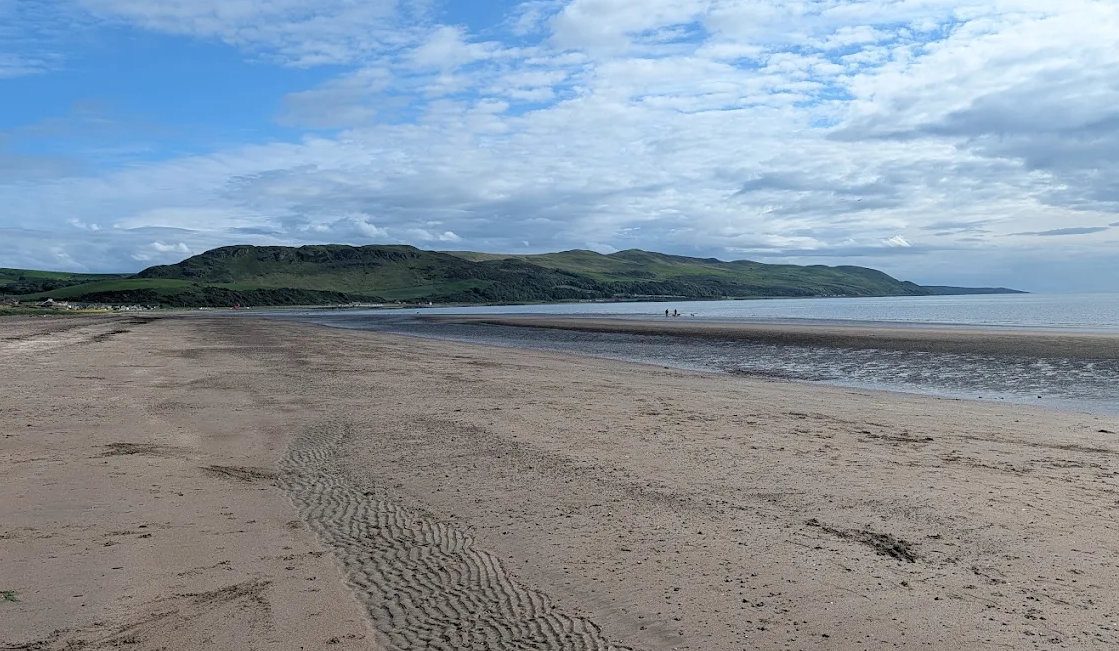
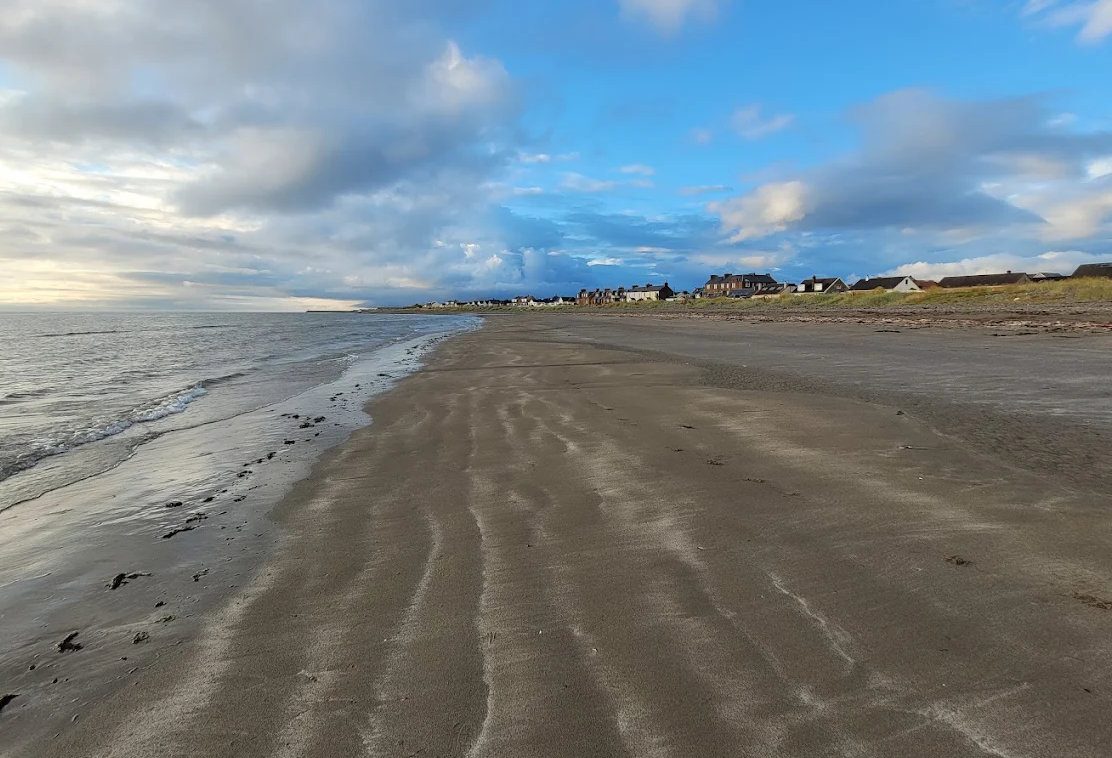
The little lighthouse on the south pier is the best spot to photograph the beach looking back at the town.
The Quay Zone
Beside the harbour, the Quay Zone is the town's community leisure centre — pool, gym and studio — and the best wet-weather option for families. It reopened in January 2026 after storm damage; the café, soft play and viewing deck were still to follow, so check before relying on them.
For boat owners
The harbour has 35 serviced pontoon berths with water and power, an amenities block, and a payment machine that also issues the toilet and gate codes. Berthing has been notably cheap by Scottish marina standards.
The tidal rule is the important part. The harbour silts because the river deposits sediment, so entry and exit should be restricted to about three hours either side of high water. Depths change; the channel and basins have been dredged periodically, most recently to around 2 metres in the channel and 1.5 metres in the basins, but shallower berths dry out.
Two pieces of local knowledge from visiting skippers: the deep water lies closer to the south pier than the north breakwater, and the dredged channel runs centrally towards the screen jetty, which is there to keep debris off the working quay.
Contact the harbourmaster (South Ayrshire Council, which has run the harbour since 1996) for current charges and tidal information, and check depths yourself rather than assuming.
The Waverley paddle steamer calls here on a handful of dates each summer — the one day a year the harbour gets a ship that size alongside.
For how the harbour shaped the town, see the history of Girvan.