The Ailsa is the reason Turnberry exists, and it has been built three times.
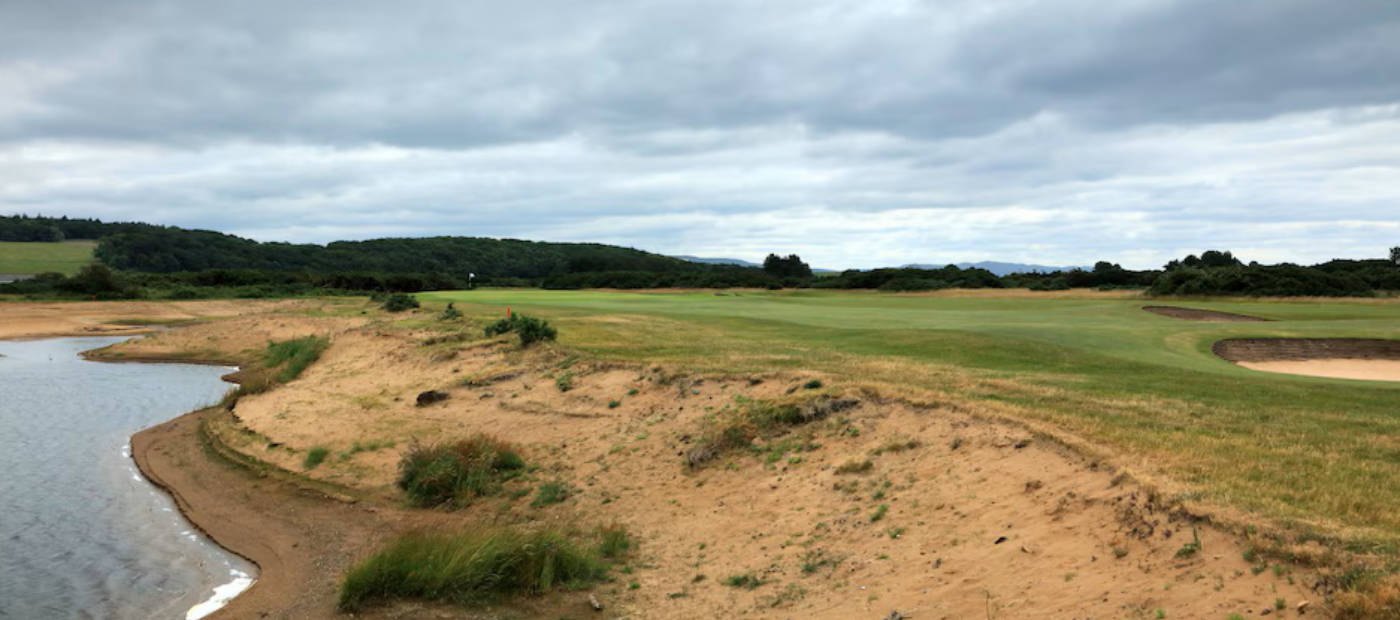
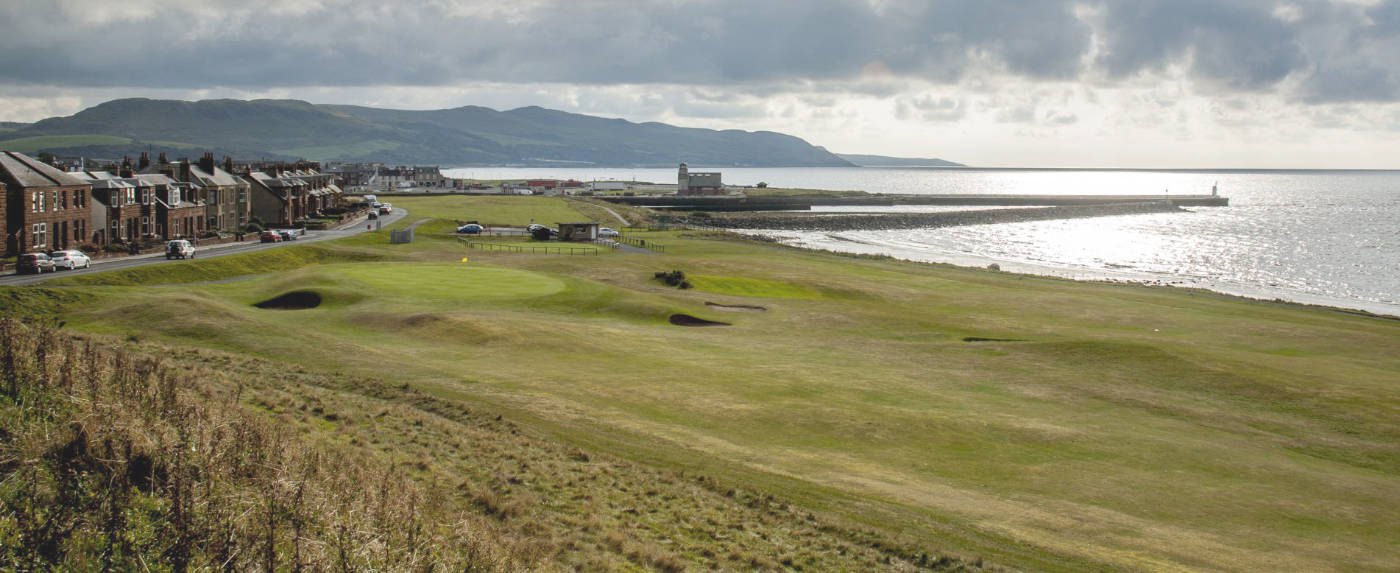
It runs almost entirely along the shore between Turnberry Point and Maidens, and the stretch from the fourth to the eleventh is as fine as links golf gets. What makes it unusual among the great courses is that almost none of it is original — it has been destroyed and remade twice, and the version you play today is less than a decade old.
The three architects
Willie Fernie, 1906. The Glasgow & South Western Railway built the hotel and the courses together, and Fernie — Open champion of 1883 and long-serving professional at Royal Troon — laid out the original links. By 1909 there were two eighteen-hole courses; the No.1 became the Ailsa. Major Cecil Hutchinson reworked it, finishing in 1938.
Philip Mackenzie Ross, 1949–51. Then the war. The links were concreted over for RAF Turnberry — runways, hangars and transformer houses — and afterwards the land was described as acres of tarmacadam. Only a stubborn campaign by Frank Hole of British Transport Hotels persuaded the government it should be a golf course again. Ross lifted the runways, buried the ground under sand and topsoil and rebuilt the links from nothing. The Ailsa reopened in 1951 to what one account calls a justifiable fanfare of trumpets. It is one of the great restorations in golf.
Martin Ebert, 2016. Ebert has become the architect the Open rota calls — he has worked on eight of the ten Open venues, everything except St Andrews and Muirfield, and did the 2019 Royal Portrush work. His stated philosophy is minimalism, historical research and refining rather than overhauling.
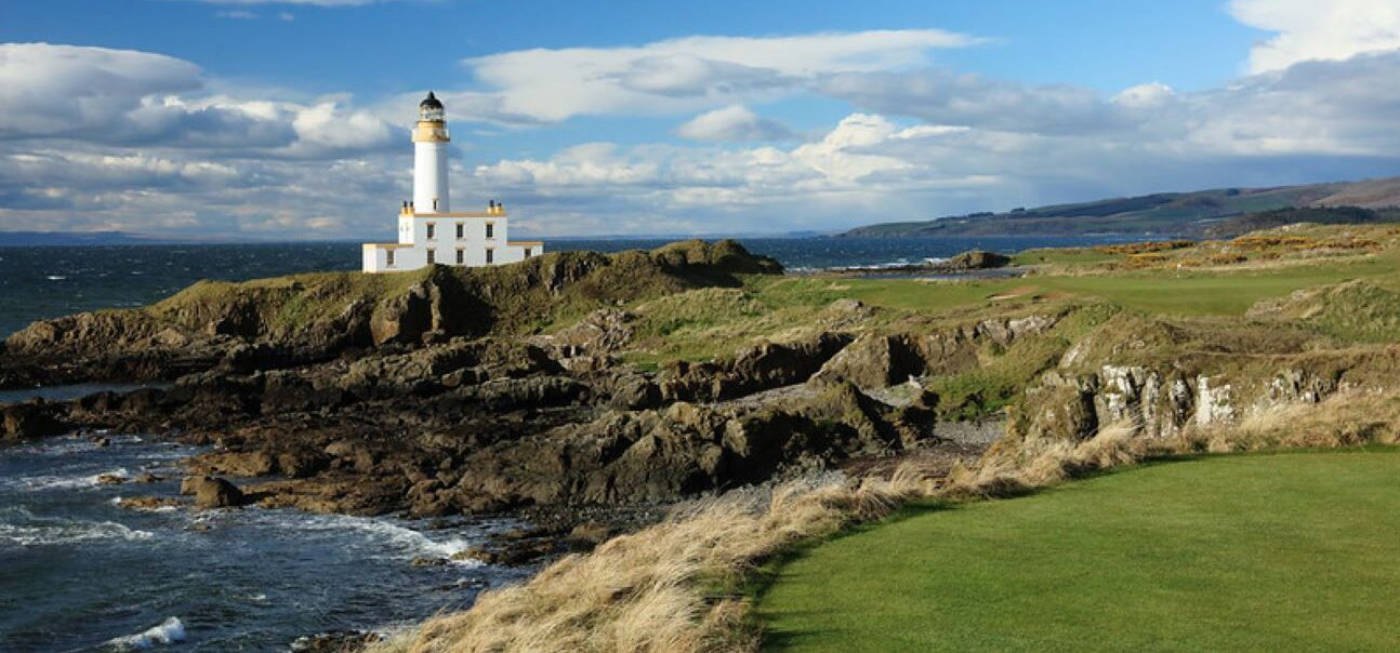
At Turnberry he did the opposite of refine. He looked at the stretch by the lighthouse — long acknowledged as the most beautiful land on the course and, in the honest verdict of one reviewer, home to 'the most boring beautiful hole in Scotland' — and rebuilt it entirely.
What Ebert actually did
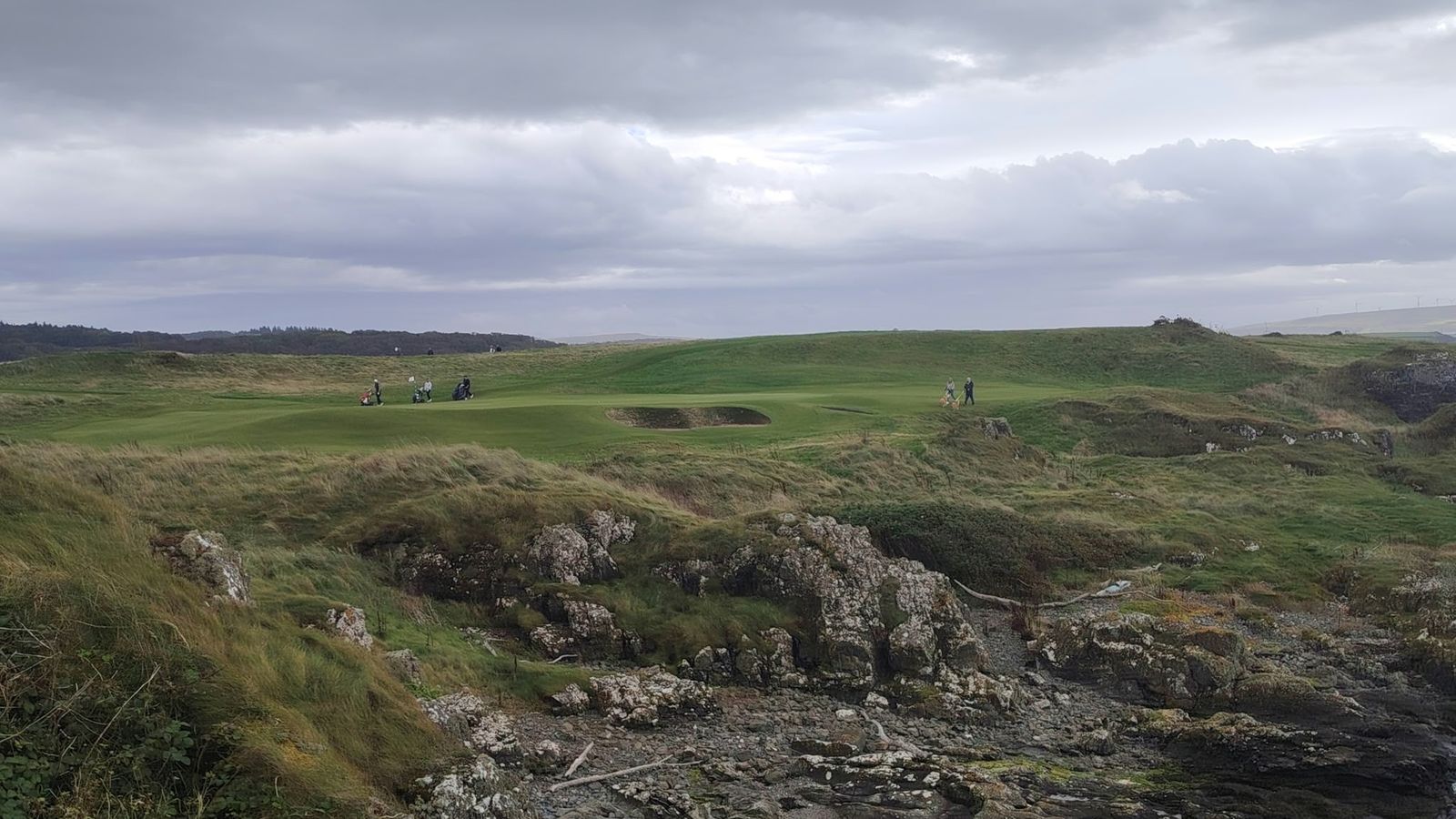
The old ninth, tenth and eleventh were a workmanlike par four, par four and par three that played away from the water. Ebert broke all three up and rebuilt them as a par three, par five, par three sequence pushed hard against the rocky bluffs above Castle Port Bay.
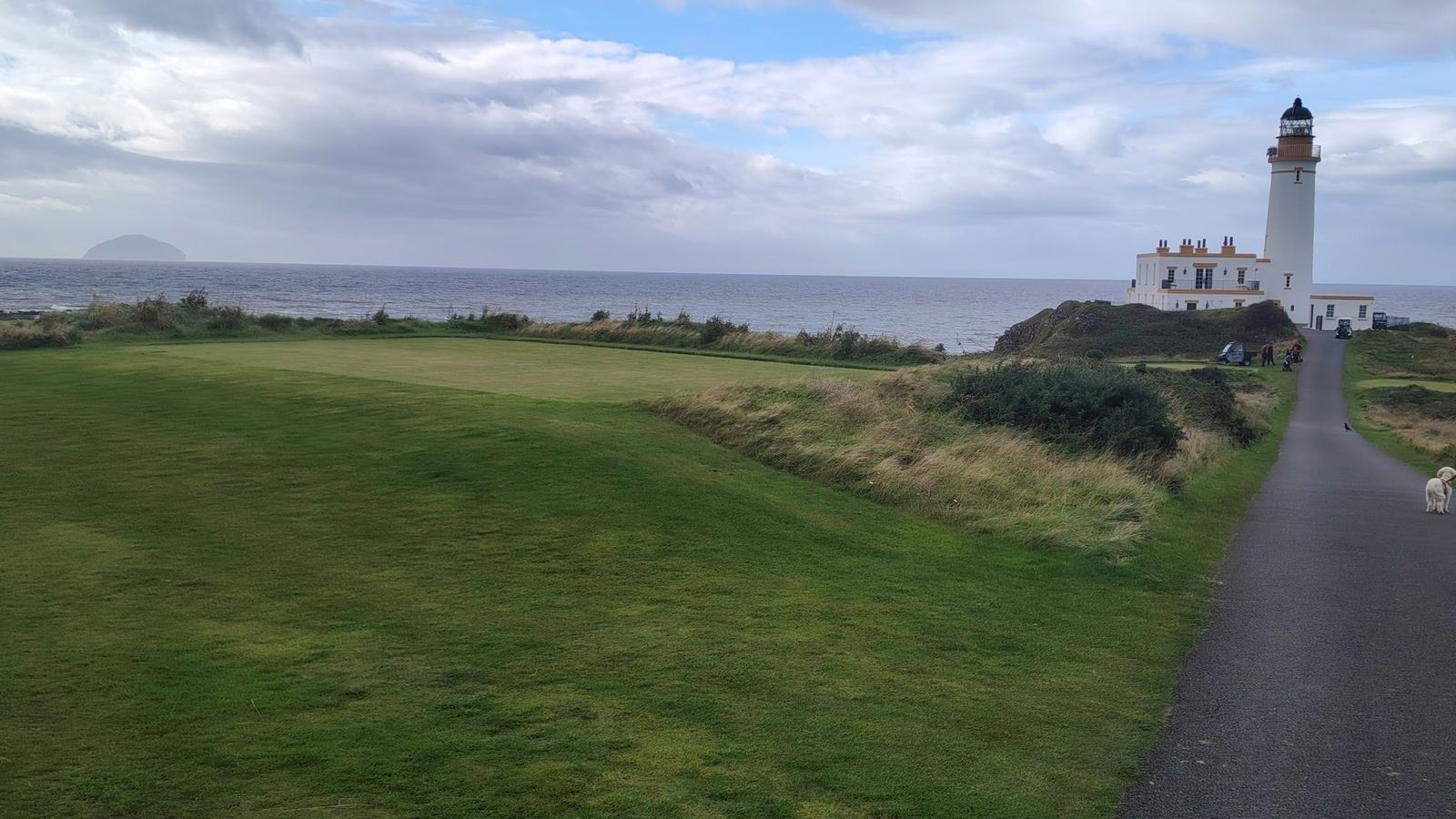
- The 9th, 'Bruce's Castle' — now a long par three played all-carry across the rocks to a green set beneath the lighthouse, beside the ruins of the castle where Robert the Bruce was traditionally born in 1274. Roughly 190 yards from the everyday tees, up to about 250 from the championship markers. It is routinely called one of the best short holes in Scotland, and it is the shot everyone comes for.
- The 10th, 'Dinna Fouter' — Scots for don't mess about, and good advice. A par five from an elevated tee, doglegging left around the bay towards a green perched near the water. Its 'donut bunker' sits in the middle of the fairway to punish a lazy layup; Mackenzie & Ebert restored it to its original shape from historical photographs.
- The 11th — a par three across the cliffs, transformed from a bland hole into one that will be famous in its own right.
Every tee, green and bunker on the course was reconstructed, with the greens rebuilt on sandier root zones — old material mixed with dune sand — for firmer, faster, better-draining surfaces. Further work in 2025 refined the inward half at the 12th, 13th, 14th, 15th and 17th.
The whole resort renovation, courses and hotel together, is reported at around £200 million. The Ailsa went from highly regarded to top of most Great Britain and Ireland rankings.
The lighthouse halfway house
The lighthouse stood empty for years. The 2016 work turned its base into the halfway house — coffee, a restaurant, an outdoor terrace looking over the Firth of Clyde to Arran — with two luxury suites above that guests can book.
It is widely described as the finest halfway house in golf, and it is the only one where players are known to come back for a second visit after their round.
The Opens
The Ailsa has staged four Open Championships — 1977, 1986, 1994 and 2009 — plus the Women's British Open in 2002.
1977 is the one everybody means. Tom Watson and Jack Nicklaus pulled so far clear of the field over the final two rounds that they were effectively playing match play, trading birdies in extraordinary heat, Watson winning by a stroke. It is remembered as the 'Duel in the Sun' and is regularly called the finest head-to-head the game has produced. The clubhouse bar is named after it.
2009 produced its own: Tom Watson, at 59, stood on the last needing a par to win an Open thirty-two years after the first, and lost the play-off to Stewart Cink.
The championship has not returned since. The R&A's position has been that it will not while attention would fall on the venue's ownership rather than the golf.
Playing it
The 2016 changes widened the landing areas, so it is not brutal from the forward tees. The weather is the defence: this is exposed coastal ground and a westerly changes every club in the bag. The back tees are for very good players.
Higher handicappers enjoy it far more with a caddie — not for the yardages but for the lines, which are not obvious on first acquaintance.
2026 green fees — what you'll actually pay
| When | Non-resident | Hotel resident |
|---|---|---|
| 1 May – 30 September, all days, standard times | £1,000 | £475 |
| 1 May – 30 September, late-afternoon tee times | £650 | £475 |
| October (no mats) | £315 weekday · £360 weekend | lower; ask |
| Mid-November onwards (mats in play) | £175 weekday | lower; ask |
The £1,000 summer fee applies every day between May and September for golfers not staying at the hotel — in 2025 it was weekend-only, and for 2026 the resort extended it across the week. Hotel guests pay £475 all season, which is why the resort's own advice is that staying and playing works out cheaper than a room elsewhere plus the walk-up fee.
The real bargain is winter: from mid-November a weekday round on mats is £175, about 17 per cent of the summer rate, on a course that stays open and in good condition all year.
Booking as a visitor
Tee times are bookable online or through the reservations team; resident rates require the hotel confirmation number in the same name. Summer slots go months ahead and the resort holds the best morning times for guests. No handicap certificate is needed, but players must be 16 or over on the Ailsa. Groups of fewer than four may be paired up.
Caddies, hire and buggies (2026)
- Caddie from £85 per round plus gratuity — book ahead; recommended for a first visit.
- Club hire TaylorMade sets from £65 per round.
- Electric trolley from £35 per round; pull trolleys available.
- Buggy from £65 — on the Ailsa only with a valid medical certificate and driven by a caddie. Buggies are freely available on the King Robert the Bruce.
- Lessons and TrackMan at the Golf Academy. The Wee Links pitch-and-putt and the Cairngorms putting green are open to all, including non-golfers and families.
Clubhouse and facilities
The Golf Clubhouse sits below the hotel with the Duel in the Sun bar and restaurant, locker rooms, a well-stocked pro shop and the Academy. The hotel's Ailsa Bar & Lounge and 1906 restaurant are open to non-residents in smart dress.
How to play the Ailsa for less
- Go in April, October or winter — the course is the same and the fee is a third or less.
- Take a late-afternoon summer time at £650; in June it is light until ten.
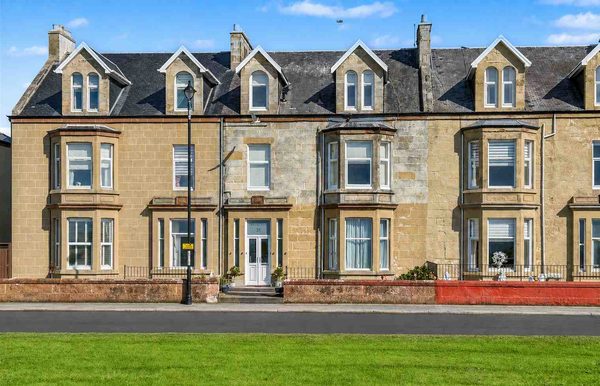
- Stay one night at the hotel and play as a resident at £475; compare that with a Girvan room plus £1,000.
- Play the King Robert the Bruce instead or as well — also an Ebert design, at a fraction of the price.
Combine with
Girvan's own course as a warm-up — a James Braid links twelve minutes south for about £30. Dinner at Wildings in Maidens. The free lighthouse walk for non-golfers, which reaches the same view without a green fee. Culzean ten minutes north.