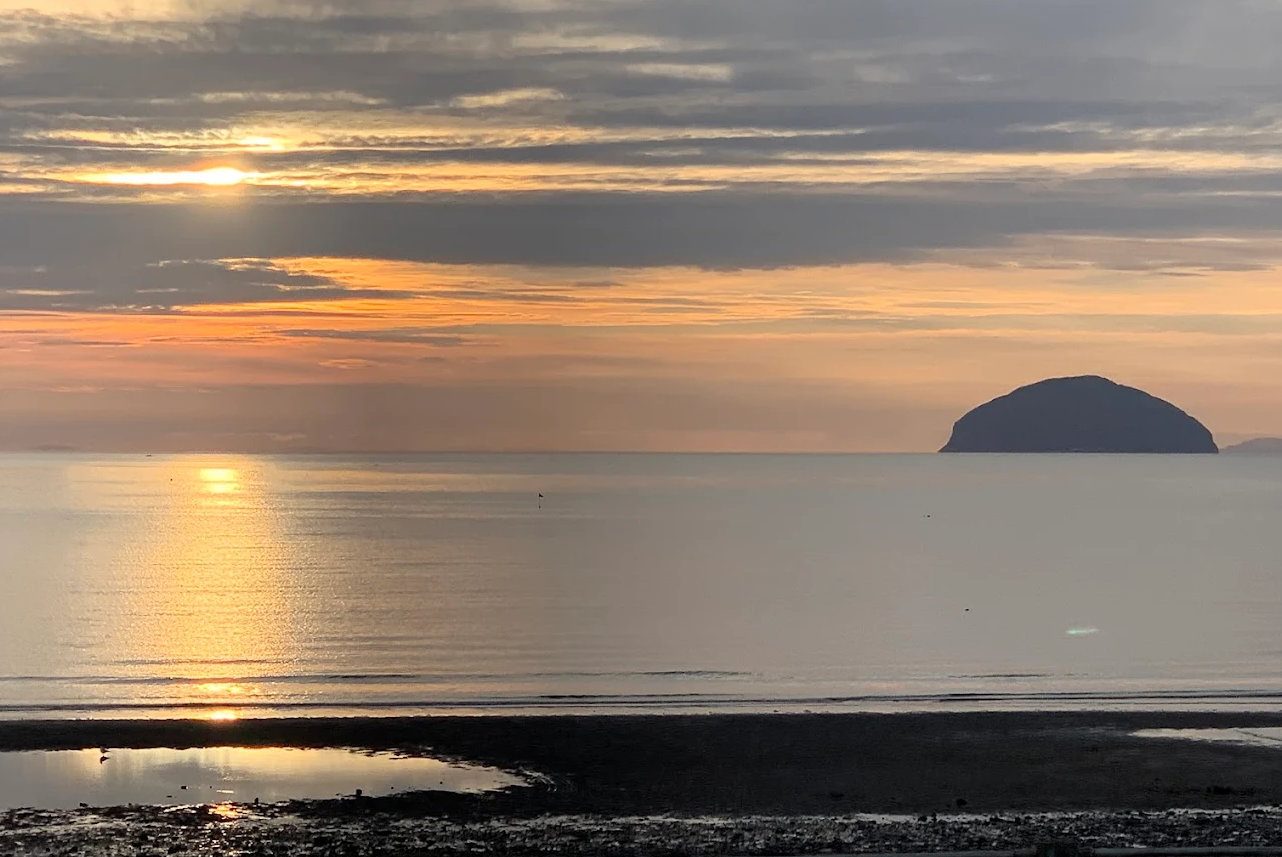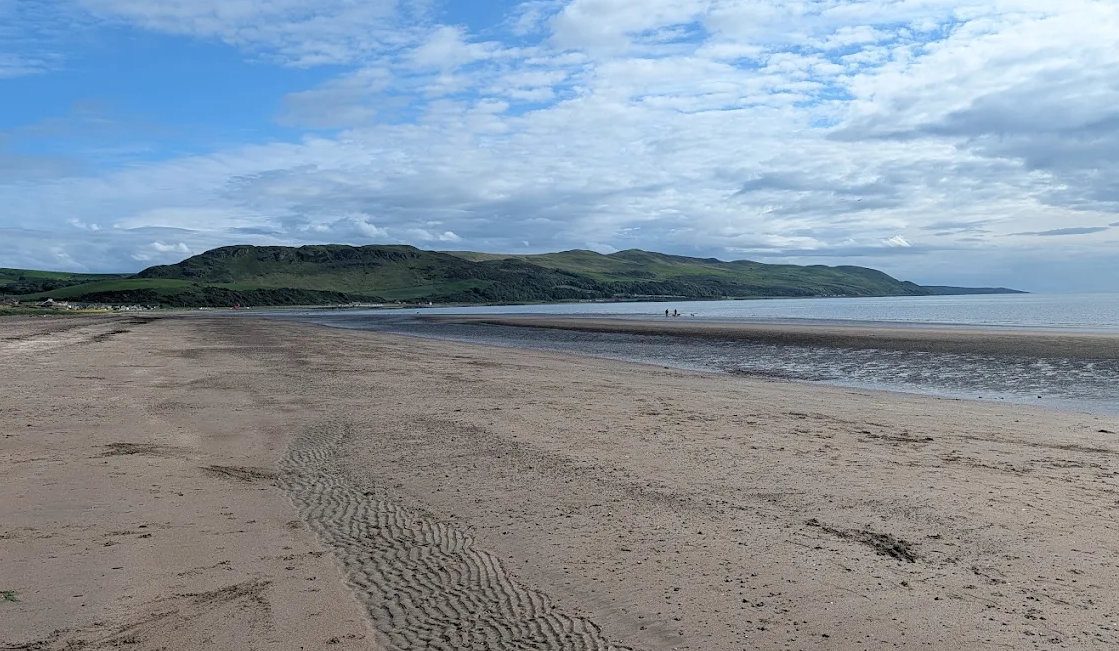
Bennane Head is the bold headland between Lendalfoot and Ballantrae, and the A77 climbs over it past a viewpoint car park with one of the great panoramas of the Firth: Ailsa Craig, Arran, Kintyre and, on the clearest days, the coast of Antrim. Below the headland, in the cove of Balcreuchan Port, is the cave traditionally identified as the lair of Sawney Bean, the cannibal who with his incestuous family was said to have murdered and eaten hundreds of travellers on the Carrick coast before being captured and executed in Edinburgh. The tale first appears in eighteenth-century English chapbooks and is almost certainly fiction — possibly anti-Scottish propaganda — but it has stuck, and it has inspired everything from 'The Hills Have Eyes' to local pub names.
Two caves, and most accounts confuse them
There are two caves under this headland, and they are routinely written up as if they were one.
Sawney Bean's Cave is at the back of Balcreuchan Port, the cove on the north side of the head (grid ref NX 099 876). It is a raised sea cave in the pillow lavas, dry inside, with a winding passage that forks some twenty metres in. It needs a torch, and the entrance is only reachable at low tide.
Bennane Cave, also called Snib's Cave, is a different cave altogether, about a mile and a half further south near the line of the old road (NX 091 861). It is around thirty metres deep, and it has mortared masonry, a blocked-up window and a fireplace, because somebody lived in it. That is the hermit's cave — not Sawney Bean's.
The real story of the cave
Henry Ewing Torbet — 'Snib Scott' — lived in Bennane Cave until his death in 1983. He was born in 1912 in Dundee, trained as an accountant and worked in banking, and gave it up in his thirties to live alone on this shore. He is usually said to have been here around thirty years, which would put his arrival in the early 1950s; the exact date is not recorded, and 1912 is his birth year rather than the year he moved in, an error that has spread widely. Locals left him food. He was found ill with pneumonia and hypothermia in December 1983, and a cairn and plaque by the old road, paid for by public subscription, remember him.
The old A77 itself, abandoned because of rockfalls, runs below the modern road and is an eerie walk: rusted barriers, rock-netting and old cats' eyes vanishing into the grass.
Visiting
Park at the viewpoint on the summit of the Bennane Head road (southbound side). The view from there is the free, safe part, and for most visitors it is enough. We would not recommend the descent to the caves: the path is steep, eroded and slippery, the Sawney Bean cave is only reachable at low tide and is cut off as the tide rises, and people have needed rescuing from the cove. If you go anyway, check tide times, take a torch and don't go alone. The Ayrshire Coastal Path stage from Ballantrae to Lendalfoot passes along here.
The cove itself is the better reason to make the descent. See the fuller account of Balcreuchan Port — the geology there is internationally important, which the cannibal story tends to drown out.