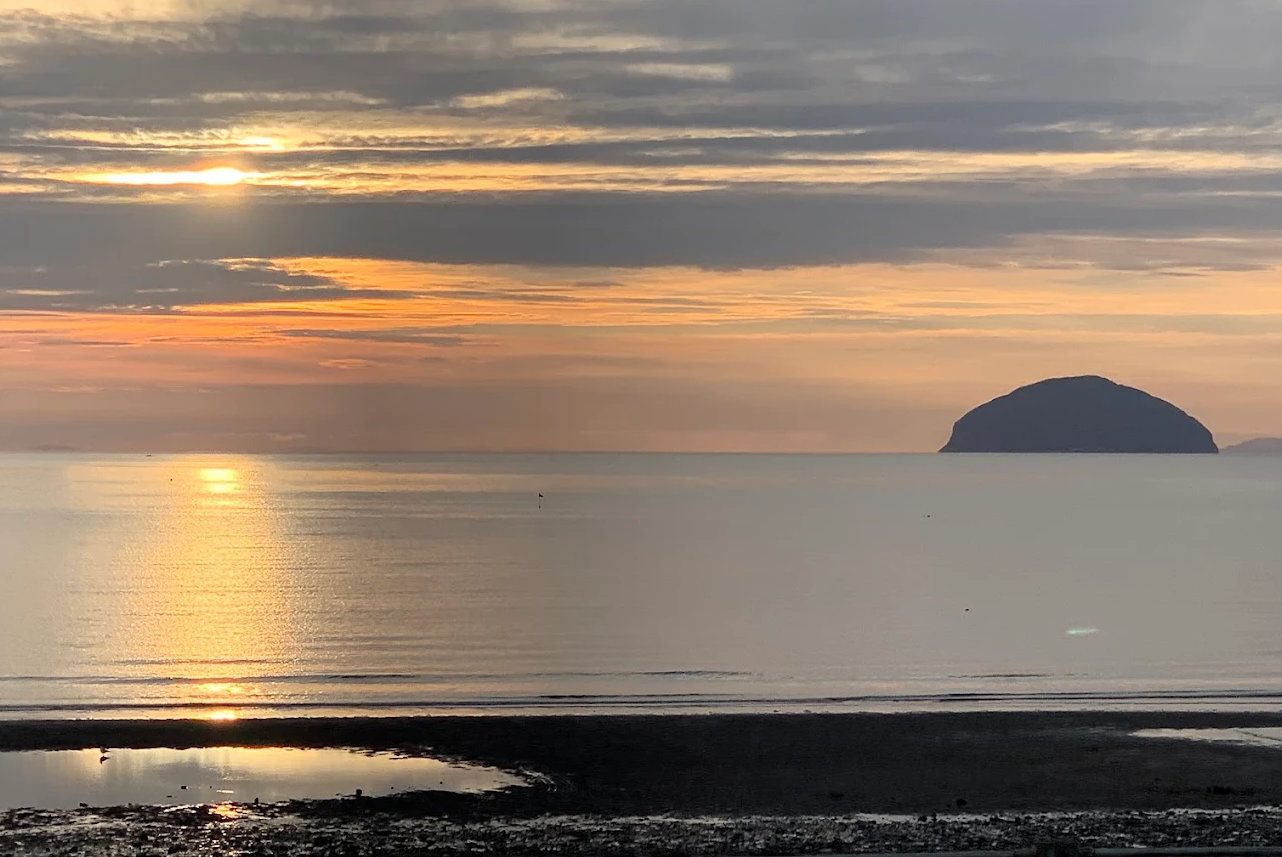
Stand on Girvan beach on a clear day and the thing filling the horizon is Ailsa Craig: a volcanic plug about 1,100 feet high, ten miles out, with nobody living on it. Every four years the world's press rediscovers that the curling stones at the Winter Olympics are cut from it, and a wave of headlines follows saying every single one comes from here.
That is very nearly true, and the ways in which it is not true are the interesting part. What follows is the version with the caveats left in: what the island actually is, why the sport of curling cares about one quarry off the coast of Scotland, and which Games broke the run.
What is Ailsa Craig?
It is a Scottish island in the outer Firth of Clyde, roughly ten miles off the Ayrshire coast and about three quarters of a mile across. Nobody lives there. It is the plug of a volcano that last did anything around 60 million years ago, and the softer rock around it has long since worn away, which is why it stands up out of the sea like that.
Today it is an RSPB seabird reserve. Scotland's third largest gannet colony nests on the cliffs, puffins have returned since the rats were cleared, and the old granite quarry sits on the shore below them.
What makes the granite worth the trouble
Granite is one of the commonest rocks on earth, so the obvious question is why anyone would quarry an offshore bird sanctuary for it.
The answer is water. A curling stone spends its life being slammed into other stones on ice. Ordinary granite absorbs a little moisture; that moisture freezes, expands, and over time the stone spalls and cracks. Ailsa Craig's rock is a riebeckite microgranite, known as Ailsite, formed roughly 60 million years ago. It is unusually fine-grained and absorbs almost no water, so there is nothing in it to freeze.
Blue Hone and Common Green: the two types of granite
Two varieties come off the island and they do different jobs:
- Ailsa Craig Common Green forms the body of the stone. It resists heat transfer, which matters more than it sounds when a 20kg stone sits on ice.
- Blue Hone granite is the denser, rarer one, and it is used for the running band, the narrow ring on the underside that is the only part actually touching the ice. Its low water absorption is the whole point: this is the piece that decides how a stone behaves, and the piece that would fail first if water could get into it.
A finished stone is therefore not carved from one lump. The body is Ailsa Craig Common Green granite, and a disc of Blue Hone is fitted into the base as the running surface. Stones are shaped, ground and polished at the Mauchline works, fitted with a handle, and matched into sets of sixteen that behave alike. A competition stone weighs close to 20kg and is expected to last decades.
Who quarries it, and how
Kays of Scotland, based at Mauchline in East Ayrshire and founded in 1851, holds the exclusive right to harvest the granite, granted by the Marquess of Ailsa, who owns the island. Reporting in 2026 put their mining agreement as running to 2050.
The island is an RSPB reserve with Scotland's third largest gannet colony, so this is not quarrying in any normal sense. No blasting is allowed. Loose granite is collected by hand, work is confined to a window outside the seabird breeding season, usually somewhere in the autumn, and it happens roughly once a decade rather than continuously.
The bit the headlines get wrong
The claim you will see everywhere is that every Olympic curling stone comes from Ailsa Craig. The accurate version is narrower and more interesting.
Kays have supplied stones to every Winter Olympics since Chamonix in 1924 with one exception: Salt Lake City in 2002, where the stones came from the Canada Curling Stone Company and were cut from Trefor granite, quarried in north Wales. Trefor is the other serious source of curling stone granite in the world, and plenty of club stones in use today are Welsh rather than Scottish.
So: almost every Olympic stone this century has been Ailsa Craig granite, and curling stones generally are still called 'Ailsas' because of the island. But 'every curling stone in the world' is a tidy line rather than a true one.
What does a curling stone cost?
More than people expect. Individual new stones run to several hundred pounds each, and a matched set of sixteen for a rink runs into five figures, which is why clubs refurbish rather than replace and why secondhand stones hold their value. We have deliberately not quoted a figure: prices are quoted on application and move with the granite supply, so any number we printed here would be wrong within a year. Kays publish current prices on request.
Can you go and see it?
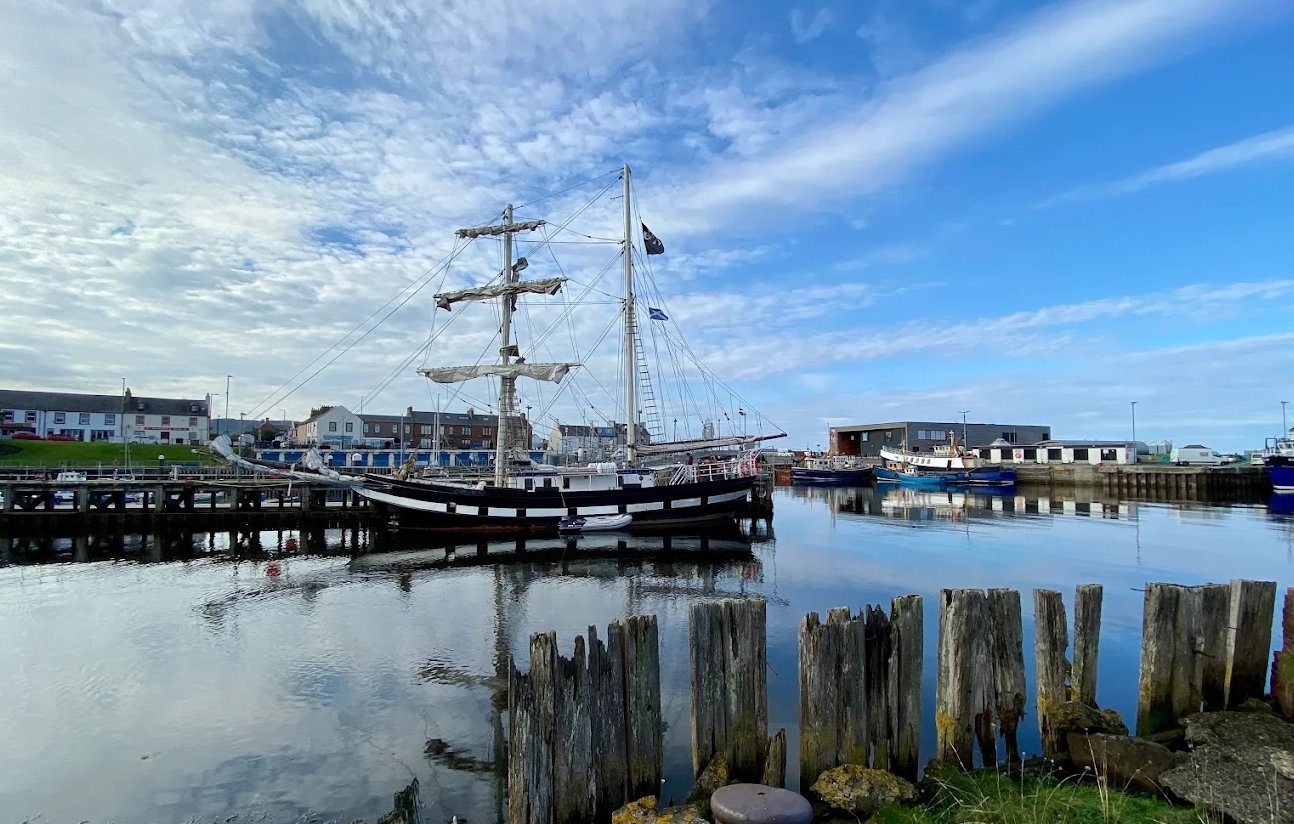
You can get close. Boat trips run from Girvan harbour in the warmer months, weather permitting, and sailings are cancelled often, so treat one as a hope rather than a plan. See the operators for who runs what.
Landing is a different matter, and the Ailsa Craig page covers the current position, the gannets, the puffins and the ruined castle.
If the sea is against you, the McKechnie Institute in Girvan has a permanent exhibition on the island covering the quarrying, the stones and the lighthouse. It is free, it is five minutes from the beach, and on a wet day it is the better option anyway.
You do not need a boat at all to get the point of the place. The view from Byne Hill or from the promenade at sunset is the reason most people remember Girvan.