The McKechnie Institute is the red sandstone building with the octagonal tower, on the corner of Dalrymple Street and Ailsa Street West. It is the architectural high point of Girvan's main street, it is free to go into, and on a wet afternoon it is the best indoor hour in the town.
The building
It is Scottish Baronial with Renaissance detailing, built in 1887 to 1888 and opened to the public in 1889, by the Glasgow firm of McKissack & Rowan. It is Category B listed, which in Girvan puts it in the top tier: the town has no Category A buildings at all.
The listing description is unusually generous for a small-town building, and it is worth knowing what to look at. Stugged red sandstone with polished dressings, on an L-plan, with a tall three-storey octagonal tower set into the re-entrant angle — the inside corner of the L. The door and windows are deeply recessed under round arches, with a boldly corbelled balustrade above carrying ball finials. The gables are crowstepped with decorative quoins, the window heads neo-Jacobean and scrolled, and there is a simplified Venetian window lighting the main hall on the Ailsa Street West side. The tower goes octagonal only above first-floor level, which is why it reads as a turret rather than a block.
The gift, and the men who made it
Here the record thins out, and it is better to say so than to invent a Victorian benefactor.
The Institute was paid for by a bequest from the McKechnie brothers, Thomas and Robert, merchants in the town. One local account describes them as wine and spirit merchants who also ran a grocery business, and puts the bequest at £6,500. The Gazetteer for Scotland, by contrast, credits a single man, Thomas McKechnie, who died in 1886. We have not been able to reconcile the two, and beyond that one death date there are no dates, no portrait and no obituary for either brother that we could find. Why they gave it is not recorded anywhere we could reach.
What they gave it for is clear enough: a public library and reading room, with a ladies' room and a billiard room, the librarian living upstairs. It was not built as a museum.
It was used, too. A contemporary report described the rooms as all but crowded every evening with labouring men, fishermen and tradesmen, which is a better argument for public libraries than most that have been made since.
One correction while we are here. You will sometimes see the donor named as "Coulter McKechnie" or "Coats McKechnie", including, until recently, on this site. Neither name appears in any source we could find. It should be Thomas, and probably Thomas and Robert.
From library to museum
The building stopped being Girvan's library in 1975 and came close to being lost. It was Girvan Community Council that rescued it from closure and dereliction, and it reopened as a museum and gallery on 8 August 1982, also housing the Carrick Arts Centre.
Dr Margaret McCance was honorary curator from 1982 until 2000, eighteen years of it, and the volunteer group the Friends of the McKechnie was formed after she stepped down. The Friends still work in partnership with South Ayrshire Council, which runs the building as one of its three museum and gallery venues alongside Rozelle House and the Maclaurin in Ayr.
It has had other civic lives too. During the First World War it served as the area's registration and recruitment centre. And after McMaster Hall burned down in 1939, leaving Stumpy Tower standing on its own, the McKechnie housed Girvan Burgh Council's meetings until 1975 — the same year it ceased to be the library.
What is inside
A small, genuinely local collection rather than a grand one:
- Bronze Age cinerary urns, dated to roughly 2100 to 1500 BC.
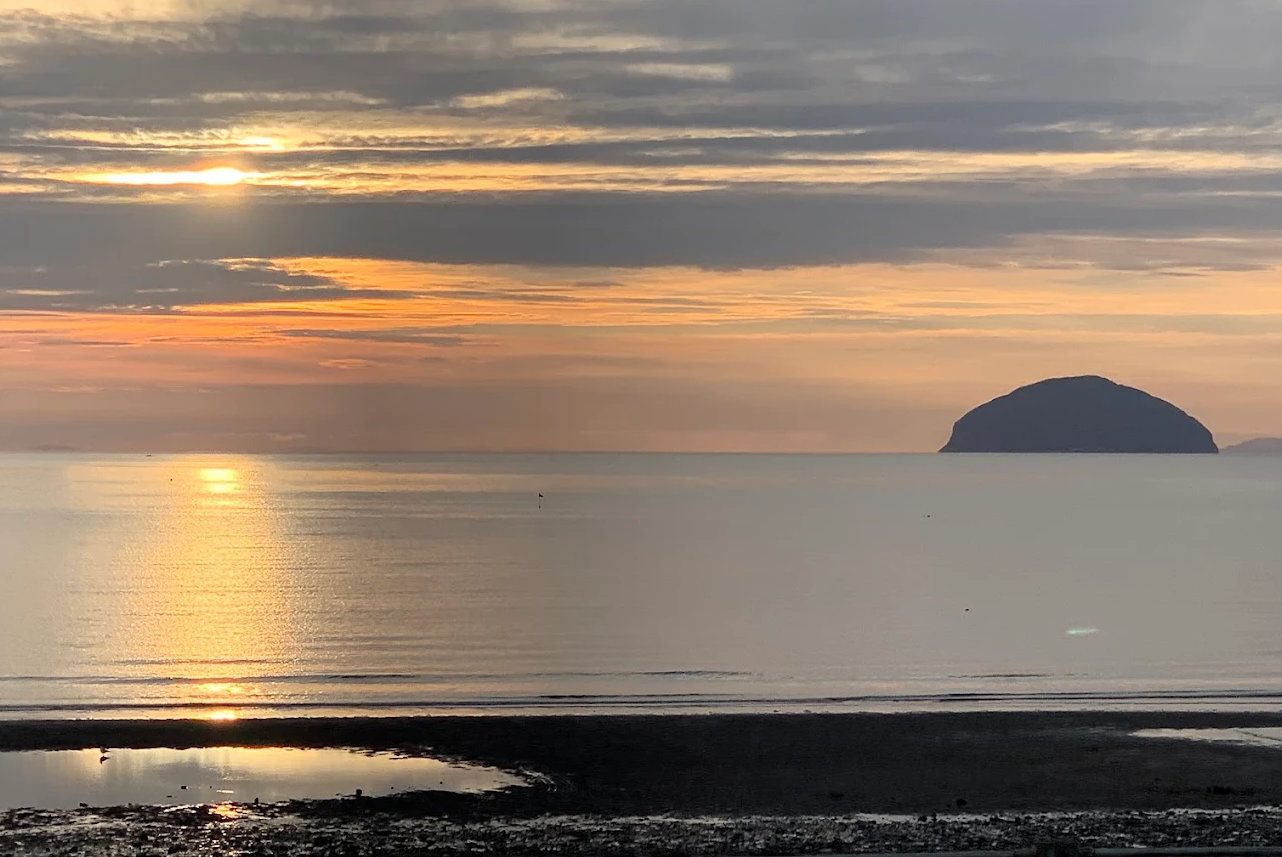
- Geology and fossils, including Ailsa Craig granite and the curling stone industry it supplied. If you want to understand why Ailsa Craig matters beyond being a view, this is where to do it.
- The Pillar Room, telling the town's story through fishing, farming, the RNLI lifeboat, the railway and local wildlife.
- Maritime material and model ships.
- A restored Victorian apartment — the old librarian's residence — and a Victorian parlour with taxidermy by the naturalist Charles Berry.
- A Turret Room inside the tower.
- Work by the animator Alex Cubie and the artist William Muir.
There is a gallery space with a changing programme, drawing on the McKechnie and wider South Ayrshire collections plus incoming and locally themed shows, and local artists exhibit and sell here. The annual Girvan Arts Festival and Tattie Fest both put on exhibitions in the building. We would not oversell the frequency: what is actually listed at any one time is usually a single exhibition and perhaps a talk.
Outside there is a garden with a pétanque court, free to use during opening hours, which is an unexpected thing to find behind a Victorian library.
Visiting
Entry is free. Opening is afternoons and limited: Tuesday 1pm to 4pm, Wednesday 1.30pm to 4.30pm, Thursday and Friday 1pm to 4pm, Saturday from 10.30am to 4pm, closed Sunday and Monday. Those hours are the ones published at the time of writing and small museums change them, so ring 01465 713643 if you are making a special trip.
There is an accessible entrance on Ailsa Street West and an accessible toilet. What we could not establish is how you reach the first floor, where the Victorian apartment and the Turret Room are. If that matters to you, ask when you ring.
Girvan's three council car parks — the Flushes, Chalmers Arcade and Knockcushan Street — are all free, and all within a few minutes' walk.
There are free family trail sheets for children and a family engagement space, and the museum has joined the free Bloomberg Connects app, so you can read your way round it on a phone.
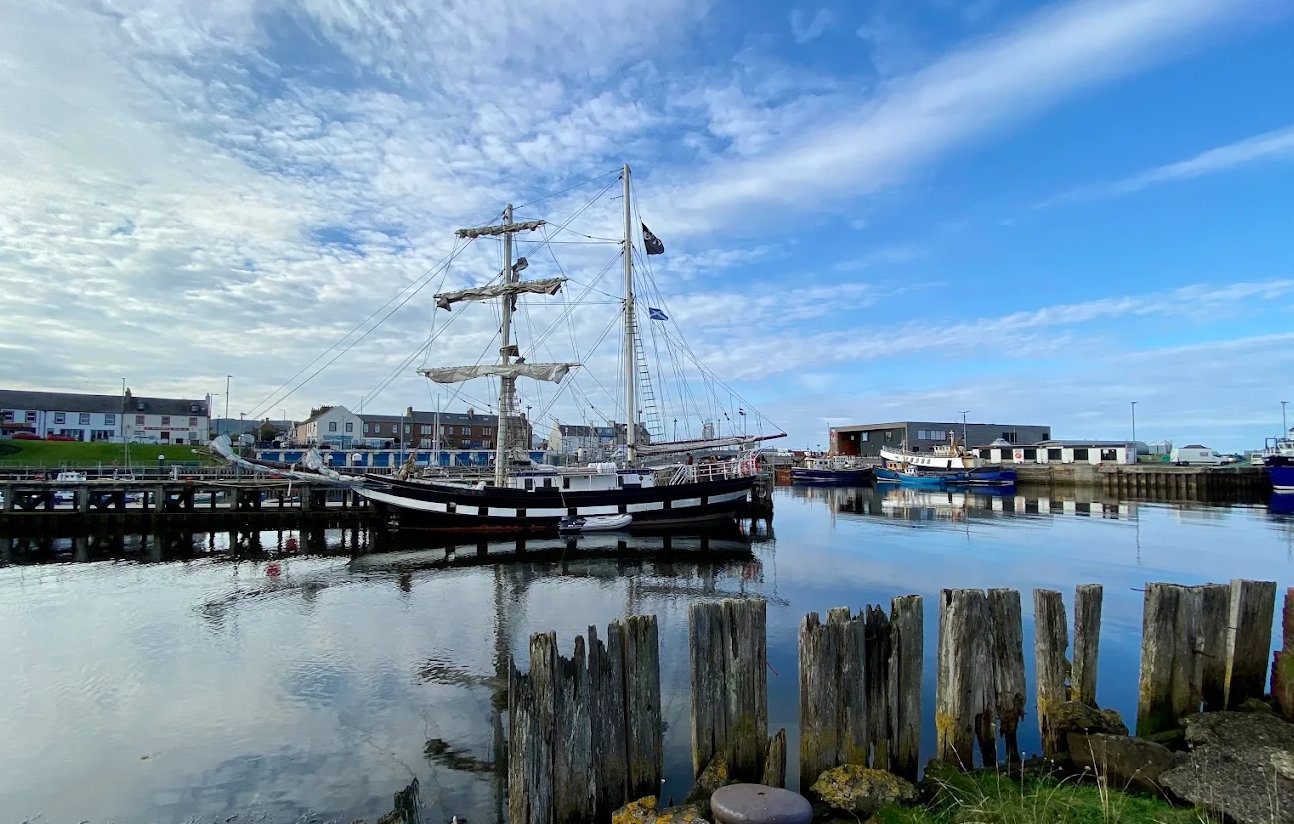
Allow about 45 minutes, longer if there is an exhibition on. It combines naturally with Stumpy Tower a few doors along, the harbour and a walk on the beach.
One piece of context worth having: South Ayrshire Council faced a budget gap of over £8 million for 2026/27, and its proposals named several Carrick facilities, including Ballantrae's library and community centre. The McKechnie was not on that list. But a free, volunteer-supported local museum is never entirely out of the weather, and going while you are here is not a bad way of making the case for it.