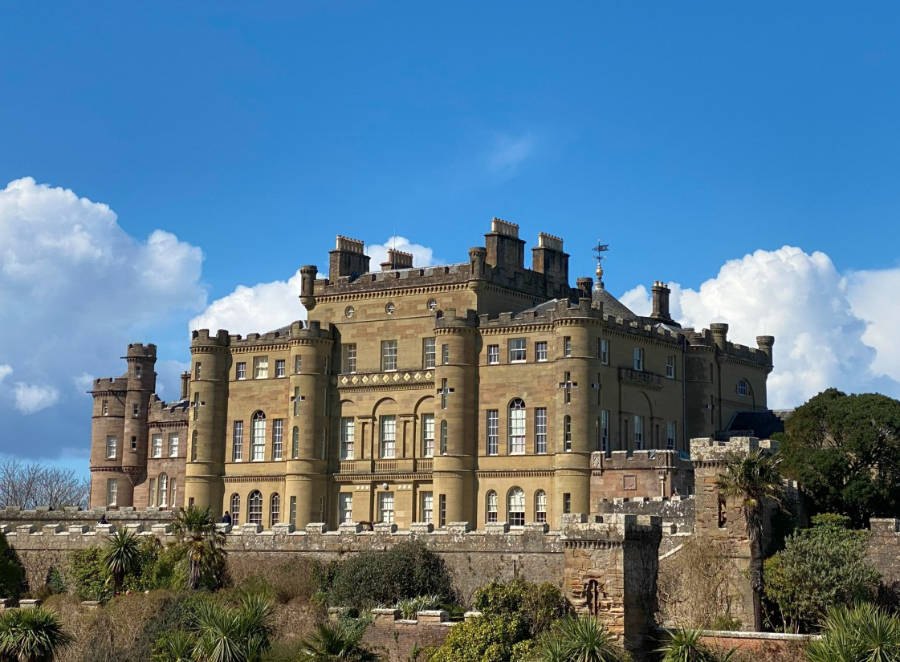
Dunure Castle stands on a rocky promontory on the Carrick coast, thirty minutes up the A719 from Girvan, with a small harbour village tucked in below it. It was the first great stronghold of the Kennedys of Dunure, the family who became Earls of Cassillis and later built Culzean — which is why the most powerful name in Carrick left a ruin here and a palace there. It is free, it is open all the time, and it comes with a clifftop park, a beehive doocot and a good café a few minutes' walk away.
What you can see today
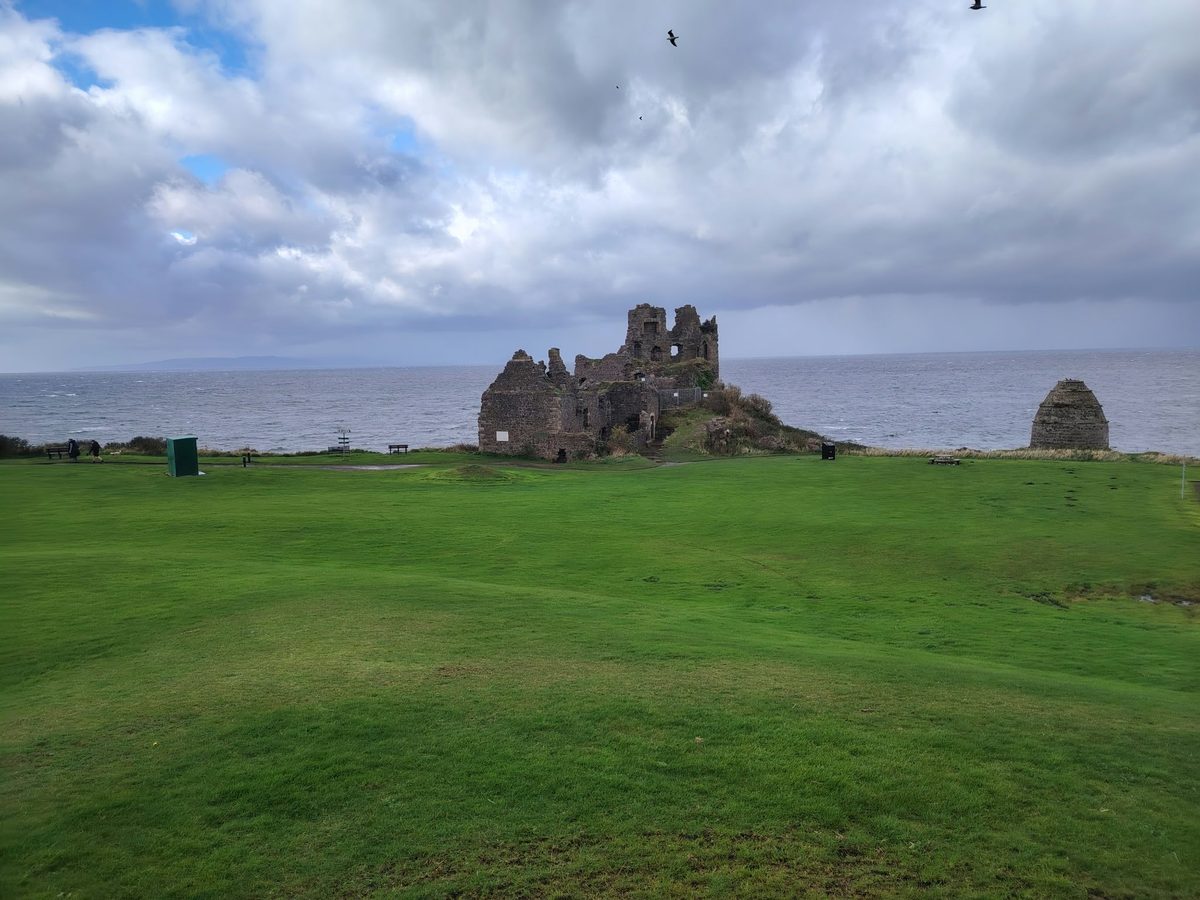
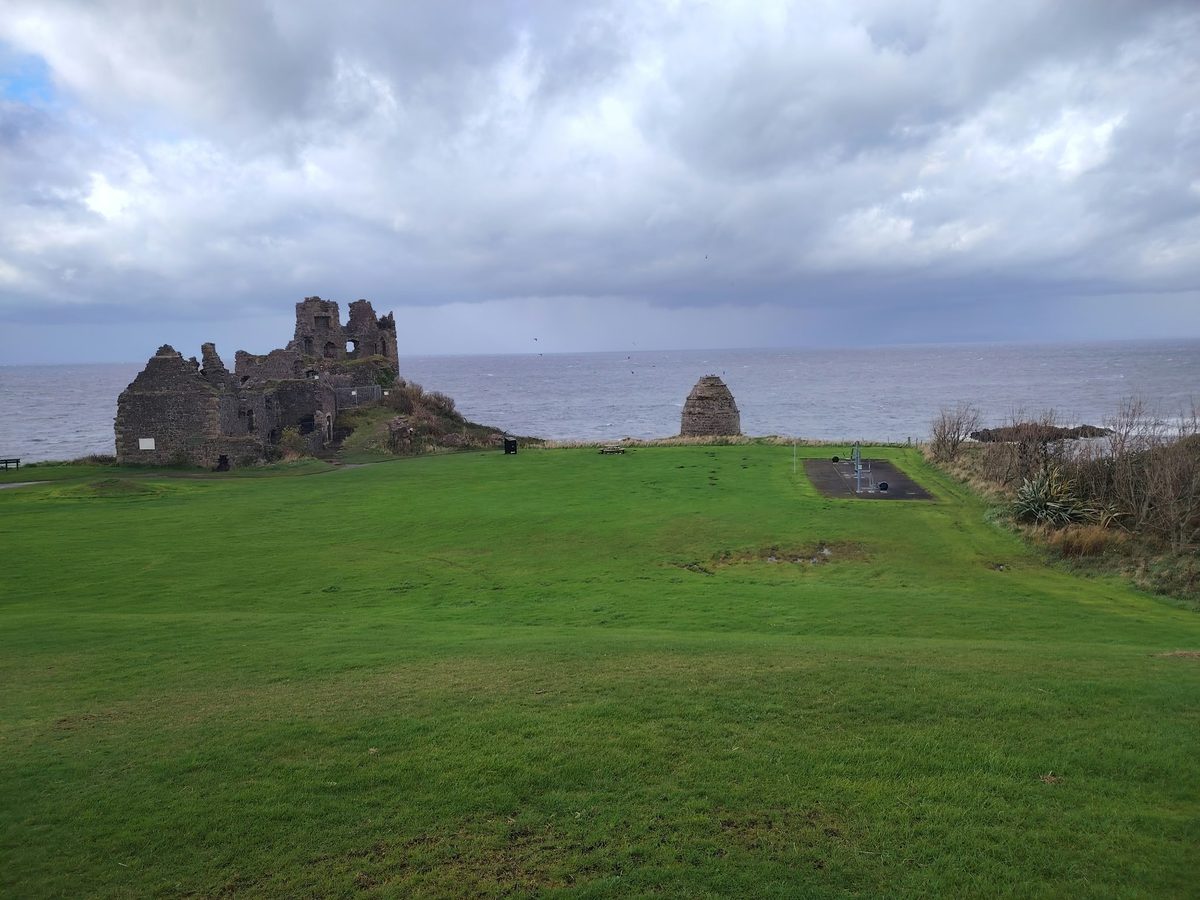
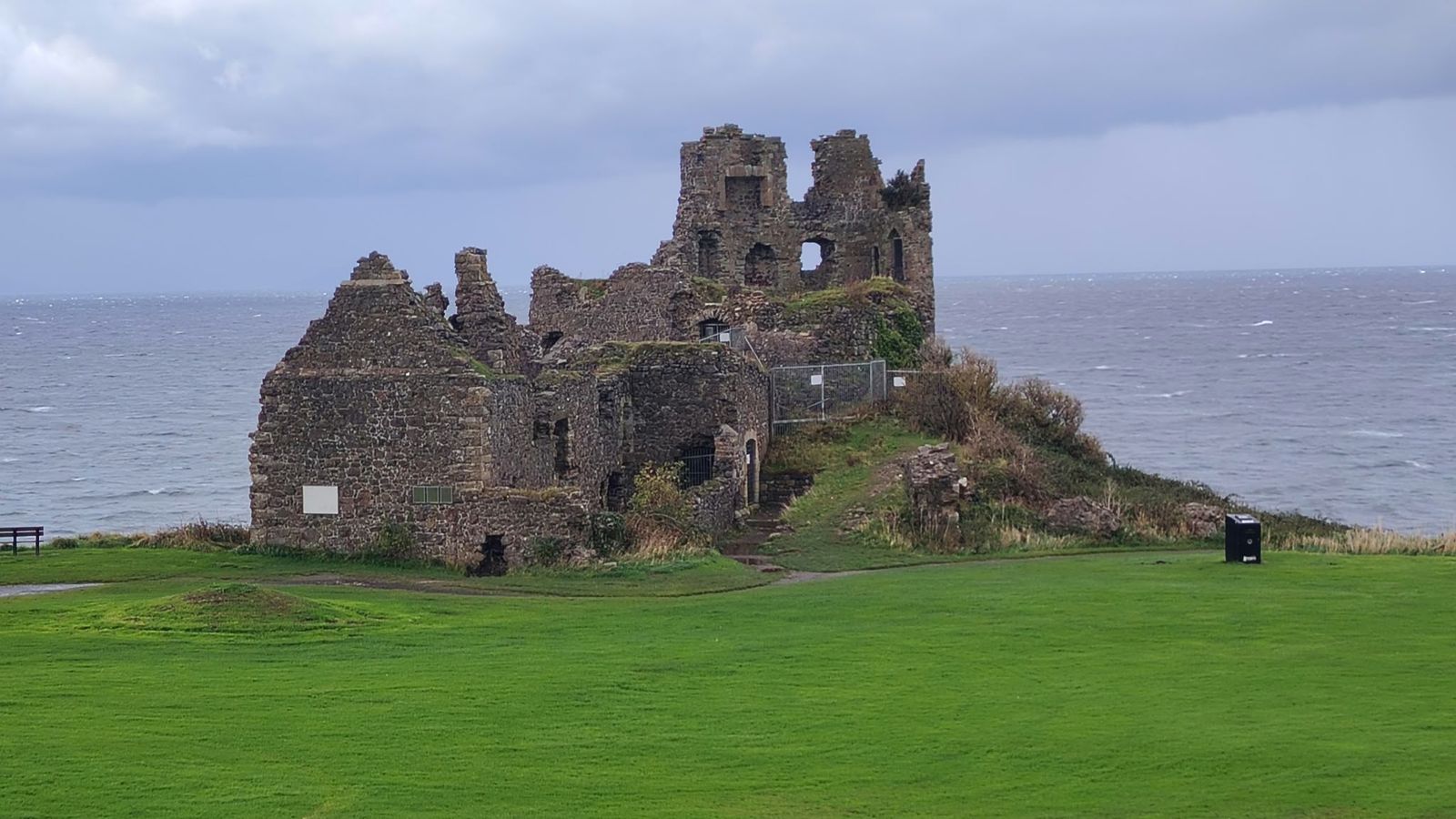
The castle is in two parts. On the seaward tip of the rock is the upper ward, the oldest part, with the stump of a once-tall tower. On the landward side is the lower ward, ranges of buildings two and more storeys high with several stone vaults still intact. Historic Environment Scotland, which protects the castle and the doocot together as a scheduled monument, describes the upper ward as very ruinous and the lower ward as dilapidated but more complete, and that is exactly how it looks on the ground.
You can walk right round the outside, look into the lower vaults and climb the grassy path at the back of the ruin for the view along the coast. The keep and the upper parts are behind safety fencing, as they have been for some time, and the fencing is there for a reason: this is a lot of loose, sea-weathered stone on top of a cliff. Stay on the right side of it, keep a hand on children, and give the whole site a wide berth in a gale.
A short history
The earliest charter for the lands of Dunure dates from 1256, and the Kennedys held them from the fourteenth century. Excavation in the 1990s showed how the castle grew. It began as a stone wall of enclosure around the crag, probably in the thirteenth century; a hall-house was then built inside it, and in the later fifteenth century the whole thing was upgraded into a much grander fortress, vaulted throughout, with machicolated parapets along the wall-head and a stone stair that ended at a small drawbridge across a gap above a four-and-a-half-metre drop into the upper castle.
Mary Queen of Scots stayed here for three days in August 1563, as the guest of Gilbert Kennedy, 4th Earl of Cassillis, on her progress down the west coast. Seven years later the same earl made Dunure notorious.
After the siege of 1570 a new kitchen range was built in the lower ward, and that is the last major addition. By 1694 the castle was described as wholly ruined. Local tradition says it was burnt or blown up, but the excavators found something more mundane: it had been systematically dismantled for its materials, with the slates, dressed stone and glass removed in an orderly way and the windows collected in one room, stripped of their lead and the lead smelted on the spot. Some of the stone may have gone to build Cromwell's citadel in Ayr. A range of rooms at the south end stayed lived in until about 1860, partly by fishermen, who left a midden of mussel shells from baiting their cod lines.
The ruin was excavated and consolidated in the late 1990s, with support from Historic Scotland, the Strathclyde Building Preservation Trust, the Heritage Lottery Fund and South Ayrshire Council. The digs turned up some four hundred carved stones, a shard of a sixteenth-century Venetian glass beaker, more than a thousand fragments of window glass, painted glass from a lost chapel and a fragment of iron shot near the main entrance.
The roasting of the Commendator
In 1570 Gilbert Kennedy, the 4th Earl, wanted the lands of Crossraguel Abbey. They had gone instead to Allan Stewart as Commendator. The Earl's men caught Stewart near the abbey, brought him to Dunure, and when he refused to sign the lands over the Earl had him roasted over a fire — on the first and again on the seventh of September — until he did. Tradition places it in the castle's Black Vault.
Stewart was rescued by Thomas Kennedy of Bargany, his brother-in-law and the Earl's great rival, whose men stormed the castle — less from chivalry than to stop the Cassillis Kennedys getting the abbey lands. The Earl was never properly punished, and was eventually ordered to provide Stewart with enough to live on for the rest of his life. Stewart is said never to have walked again. The rivalry it fed between the two branches of the family is told on our Kennedys of Carrick page.
One thing worth knowing as you stand in the lower ward: the kitchen range you can see now was built after the 1570 siege, so whatever room the roasting happened in, it was not the kitchen that survives today.
The doocot
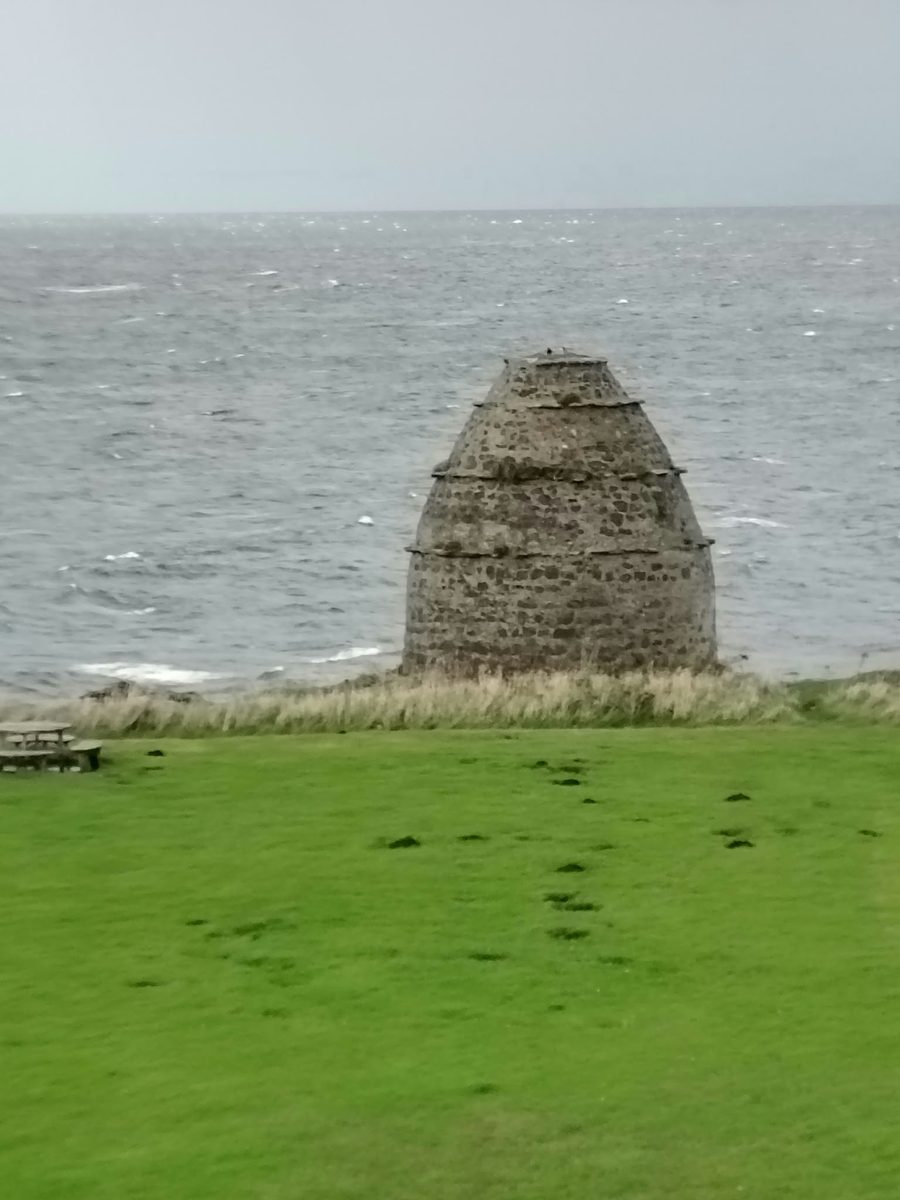
On a knoll just east of the castle stands its doocot, the dovecot that kept the household in fresh pigeon meat and eggs through the winter. It is the circular beehive type, with stepped ledges round it to stop rats climbing to the nesting boxes, and it is in far better shape than the castle. Historic Environment Scotland dates it to the sixteenth century, though some accounts put it earlier, and it is usually said to have held around two hundred nesting boxes. It is protected along with the castle, and it is the shape everyone remembers from Dunure.
Kennedy Park
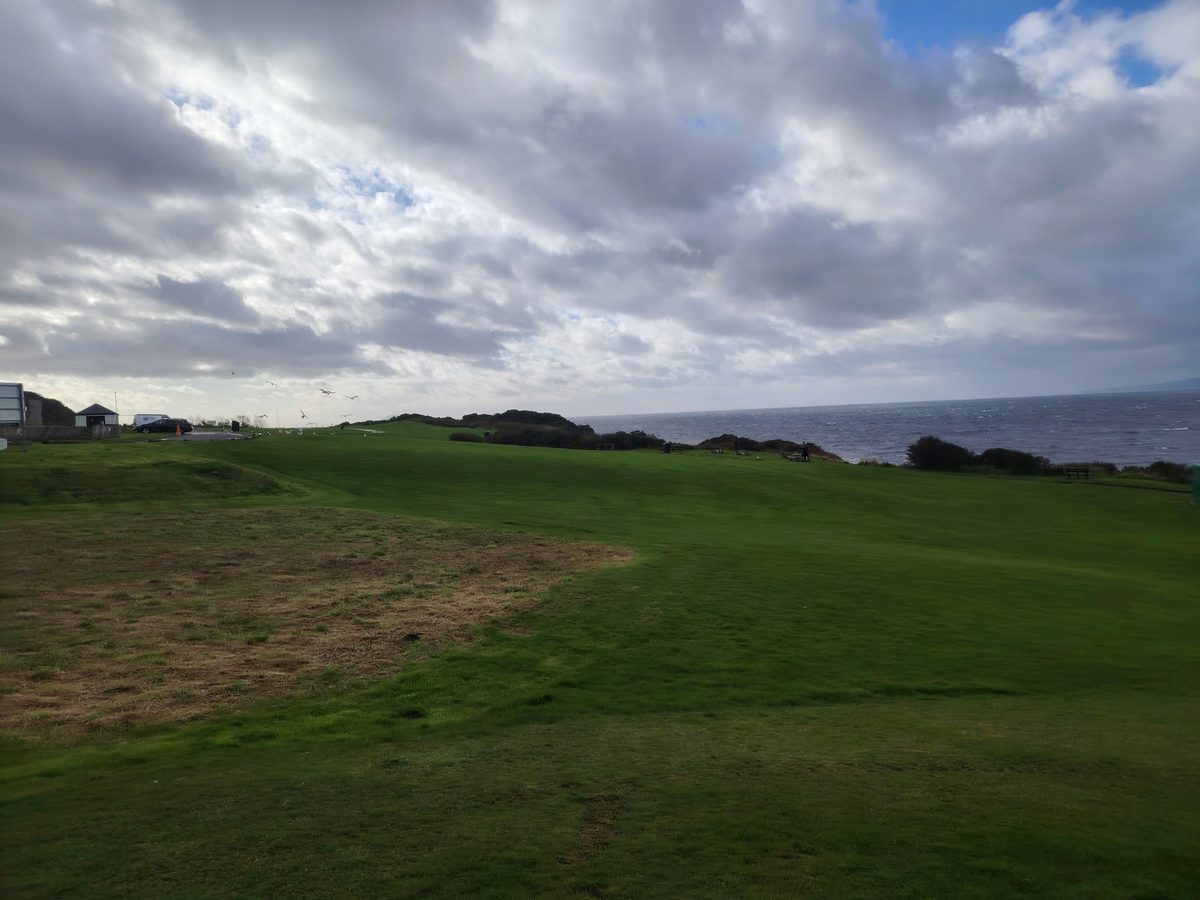
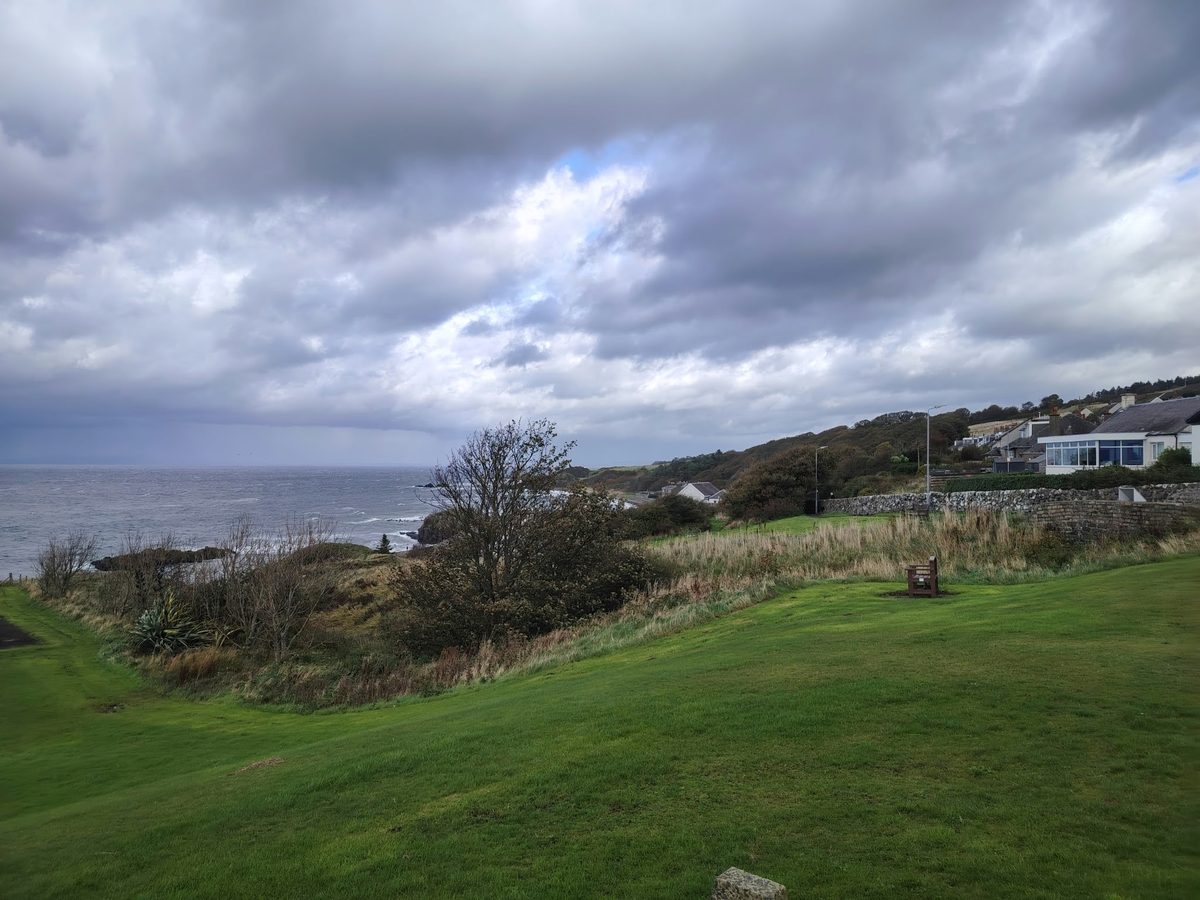
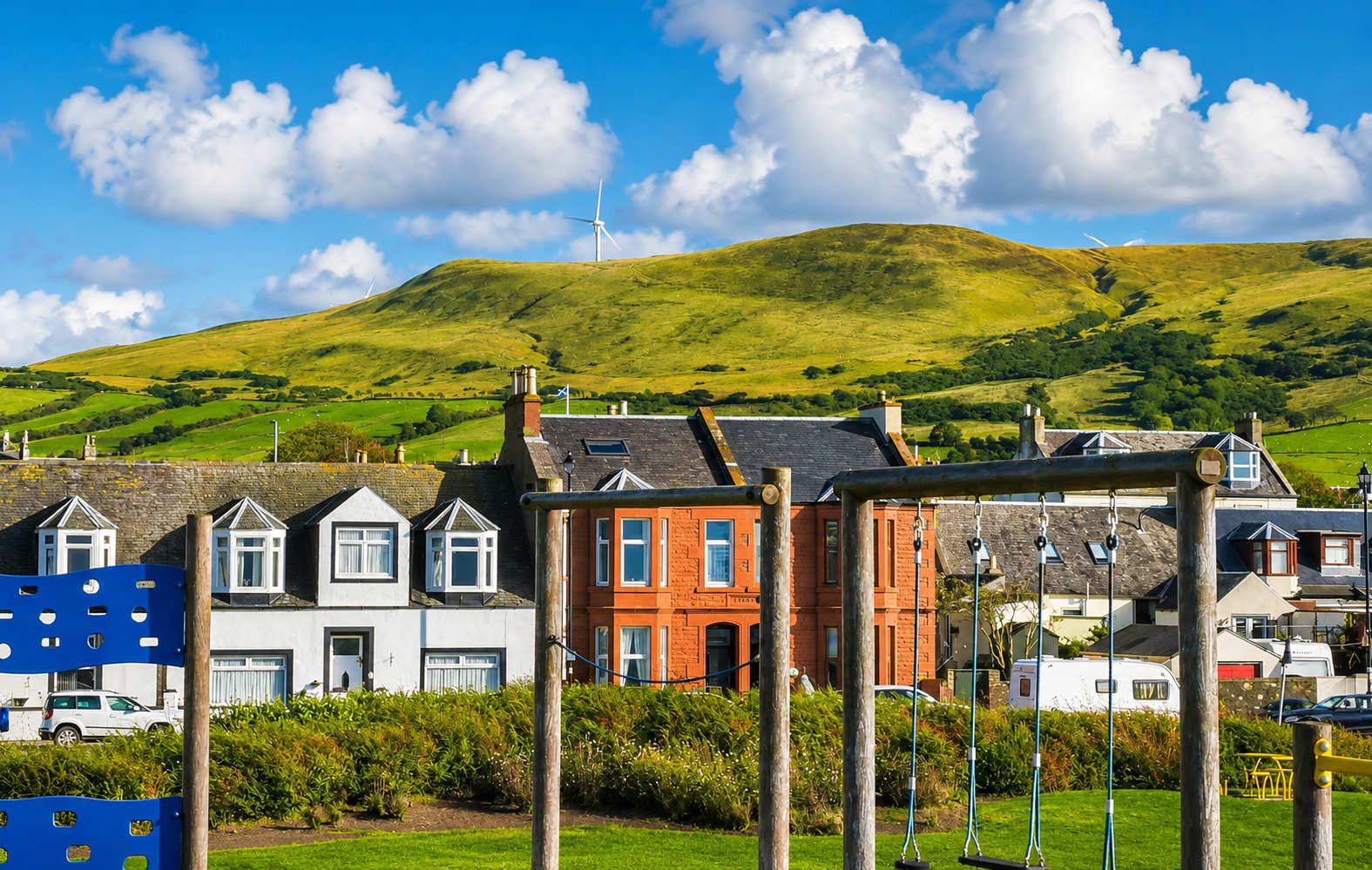
The castle sits at the end of Kennedy Park, a big open clifftop green with views to Arran and Ailsa Craig. It has a play area, a sports court with basketball hoops and goals, a football pitch, a skate ramp, an outdoor gym, picnic tables, built-in barbecues and toilets, for which there is a charge. Paths lead down from the park to the shore, where there are rock pools, and to the turf labyrinth cut into the slope above the harbour. With a free castle at one end and a play park at the other, it is one of the best family stops on this coast.
Parking
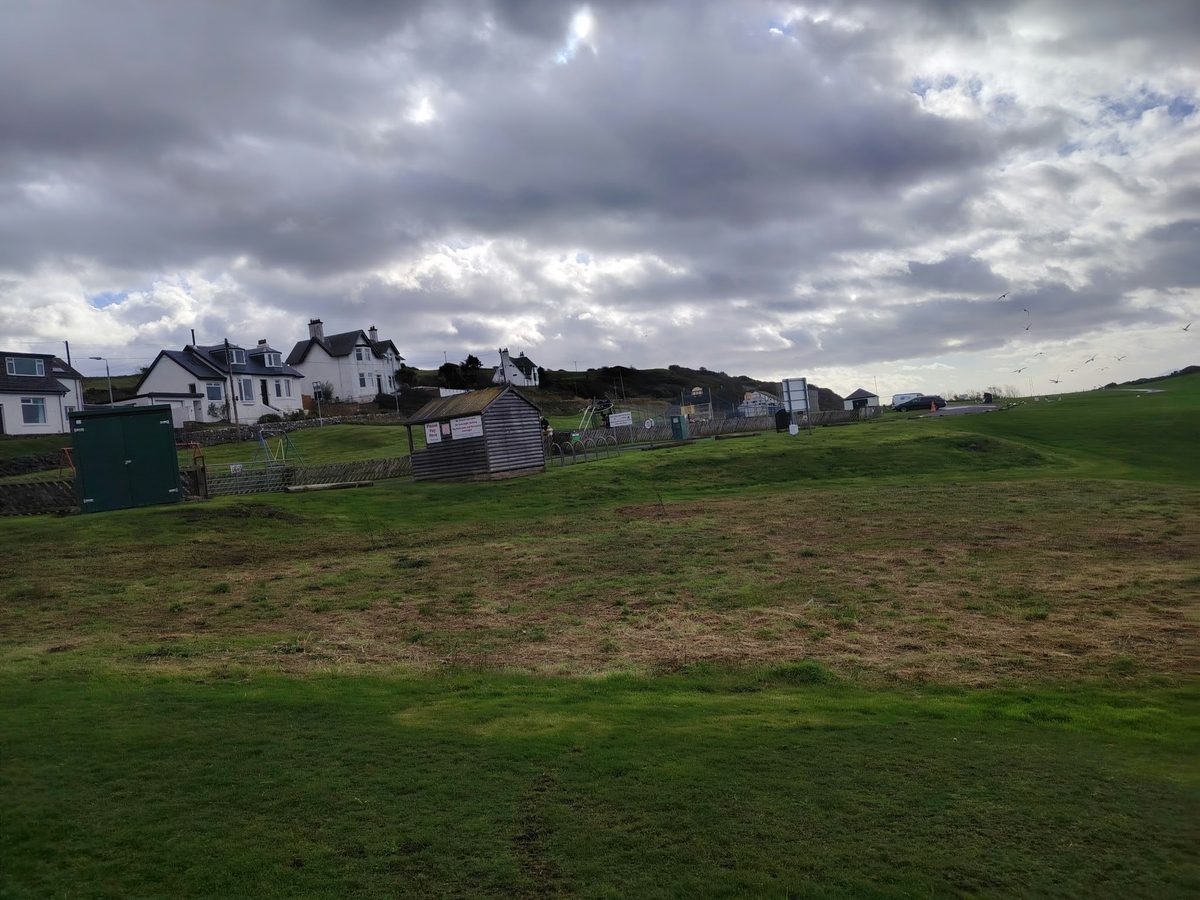
The car park is inside Kennedy Park and is run by Dunure Community Council. From Easter to the end of September there is a £3 daily charge, paid at the hut at the entrance, which goes towards the upkeep of the car park, the picnic areas and the play park. From October to Easter it is free. The signs at the entrance say there are no touring caravans and no overnight parking, and that the park gate is locked overnight.
Please don't drive down to the harbour to park. There are only a few spaces there, and Dunure asks that they are kept for people using the café and the pub. It is a five-minute walk down from the park.
Coffee afterwards: The Harbourside
Walk down from the castle to the harbour and The Harbourside Coffee & Kitchen is on the front, looking straight over the boats. It is where we went for coffee after taking the photographs on this page, and it is the natural end to a visit.
- What: breakfast, brunch and lunch made fresh, home baking from the village, and proper coffee.
- When: open seven days, 10am to 4pm. Breakfast is served from 10am to noon and lunch from noon to 3.30pm, which is also the last food order; coffee and cakes all day.
- Diets and dogs: vegetarian, vegan and gluten-free options, and the chef will talk you through other needs. Dogs are welcome.
- Seating: inside and outside, with takeaway too.
- Where: 19 Harbour View, Dunure, KA7 4LN. Phone 01292 500026.
Hours like these change with the seasons, so check The Harbourside on Facebook before making a special trip, particularly in winter. For a pint instead, The Anchorage is the village pub, also on the harbour. See things to do in Dunure for the rest of the village.
Outlander
Dunure Castle played the Silkie Island fortress in series 3 of Outlander, with the island added digitally, and the harbour below was dressed as eighteenth-century Ayr for Jamie and Claire's departure, and used again in series 4. Nothing is signposted, so bring the scenes on your phone. The Dunure village page has the details.
Getting there
About 17 miles and 30 minutes from Girvan. Take the A719 coast road north from Turnberry rather than the A77: it passes Culzean, Croy Shore and the Electric Brae on the way, and turns a drive into a day. Allow longer than the map says, because you will stop.
There is no direct bus from Girvan. Take the train or bus to Ayr, then Stagecoach 361 or 61 from Ayr to Dunure, about twenty minutes, and both finish in the village. Check times on the Stagecoach website before relying on them.
The castle, doocot and park are open access and cost nothing to visit. Dogs are welcome; keep them on a lead near the play park and the cliff edge.